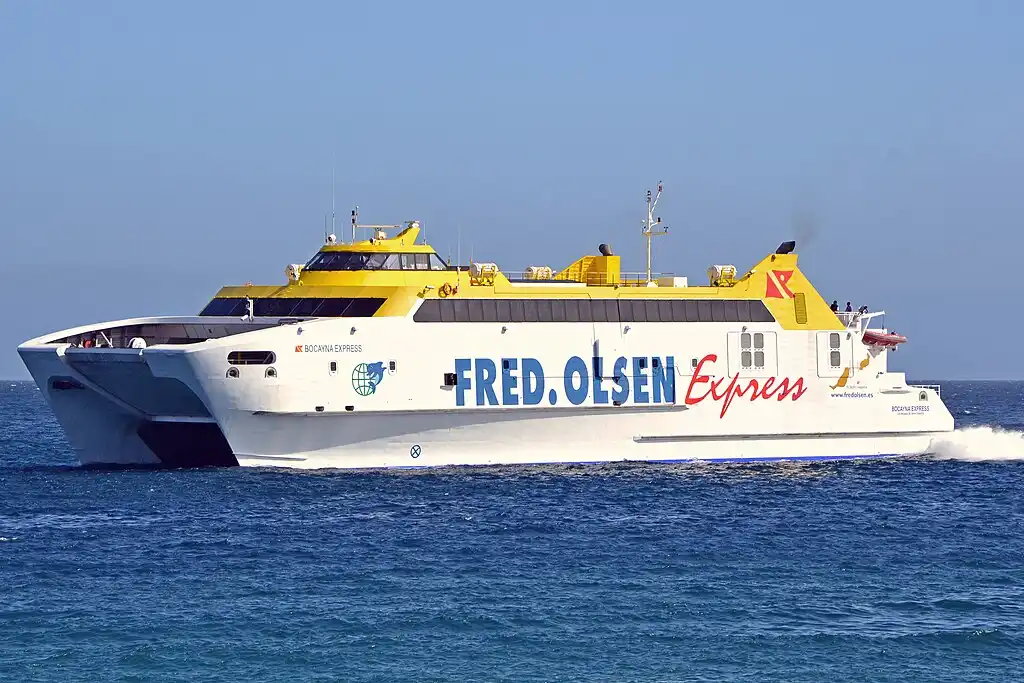
Quick answer
- Tenerife: the shortest crossing is Fred. Olsen from Agaete to Santa Cruz de Tenerife: 80 minutes, up to 8 sailings a day, with a free bus from Las Palmas to the port. Baleària sails from the port of Las Palmas to Santa Cruz in about 1 h 40, up to 6 times a day.
- Fuerteventura: Las Palmas to Morro Jable takes 1 h 45 with Baleària (3 sailings a day) or 2 h with Fred. Olsen. For the capital, Puerto del Rosario, Baleària's overnight ferry takes 6 h 15, Sunday to Friday.
- Lanzarote: one direct route, Baleària from Las Palmas to Arrecife: about 6 hours, every day.
- La Gomera, La Palma, El Hierro: via Tenerife with Fred. Olsen on one booking, with a free bus between the two Tenerife ports. Baleària also sails straight to La Palma in 8 h 45.
- Fares: Baleària's one-way fares start at €60 to Tenerife, €70 to Fuerteventura and €112 to Lanzarote. Canary Islands residents pay a quarter of that.
- Hire car: both companies carry cars, but check that your rental contract lets the car leave the island before you book the vehicle space.
All routes from Gran Canaria at a glance
Two companies sail from Gran Canaria: Fred. Olsen Express and Baleària Canarias. The routes Armas Trasmediterránea used to run are now sold by Baleària, and Armas's website forwards to Baleària's, so older guides that list Armas describe the same boats under the old name.
| Destination | Route and company | Crossing | Sailings |
|---|---|---|---|
| Tenerife | Agaete → Santa Cruz de Tenerife · Fred. Olsen | 80 min | Up to 8 a day |
| Tenerife | Las Palmas → Santa Cruz de Tenerife · Baleària | 1 h 40 | Up to 6 a day |
| Fuerteventura (south) | Las Palmas → Morro Jable · Baleària | 1 h 45 | 3 a day |
| Fuerteventura (south) | Las Palmas → Morro Jable · Fred. Olsen | 2 h | 3–4 a day |
| Fuerteventura (capital) | Las Palmas → Puerto del Rosario · Baleària | 6 h 15, overnight | 1 a day, Sunday to Friday |
| Lanzarote | Las Palmas → Arrecife · Baleària | 6 h | Daily |
| La Gomera | Agaete → Santa Cruz, bus to Los Cristianos, ferry to San Sebastián · Fred. Olsen | 2 h 10 at sea, plus the road transfer | Up to 6 a day |
| La Palma | Las Palmas → Santa Cruz de La Palma · Baleària | 8 h 45 | Varies by season |
| La Palma | Via Tenerife (Los Cristianos) · Fred. Olsen | 3 h 50 at sea, plus the road transfer | Up to 6 a day |
| El Hierro | Via Tenerife (Los Cristianos → Valverde) · Fred. Olsen | 3 h 40 at sea, plus the road transfer | Up to 5 a day |
| Mainland Spain | Las Palmas → Huelva · Fred. Olsen | From 34 h | Up to 3 a week |
| Mainland Spain | Las Palmas → Cádiz · Baleària | 36–38 h | 2 a week |
Crossing times and sailings as each company publishes them on its route pages, read on 5 October 2026. "Up to" is the busiest day: check the timetable for your date.
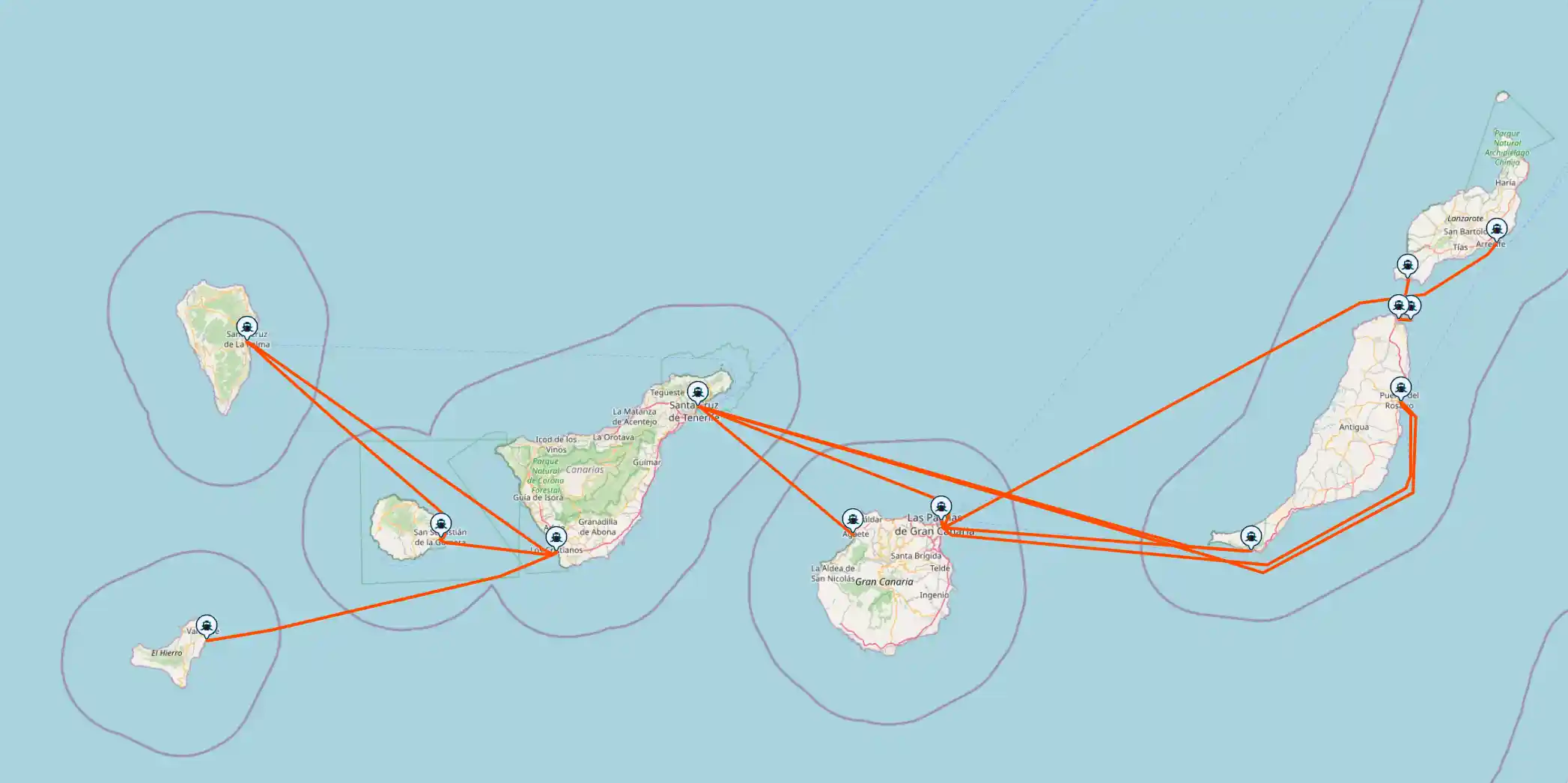
Gran Canaria to Tenerife
Both routes arrive in Santa Cruz de Tenerife, the capital, in the north-east of the island. Which one suits you depends on where you start.
Fred. Olsen Express
From Agaete: the short crossing
- Crossing
- 80 minutes
- Sailings
- Up to 8 a day from each port, every day
- Port
- Agaete (Puerto de Las Nieves), north-west Gran Canaria
- To the port
- Free ferry bus from Parque Santa Catalina in Las Palmas, 60 minutes before the sailing; book it at least 48 hours ahead
Changes of date and time are free within the same fare. Canary Islands residents pay from €11.49 one way; visitors see their fare when they search a date.
Baleària Canarias
From Las Palmas: no trip to Agaete
- Crossing
- About 1 h 40
- Sailings
- Up to 6 a day, every day
- Port
- Las Palmas de Gran Canaria
- Ship
- Fast ferry or conventional ferry, depending on the sailing
One-way fares start at €60, or €15 for Canary Islands residents.
Which one to choose
- Staying in Las Palmas without a car: either works. Fred. Olsen has the shorter crossing but adds the bus ride to Agaete; Baleària leaves from the city's own port.
- Driving from the southern resorts: Las Palmas is on the GC-1 motorway from the south; Agaete is on the north-west coast, beyond the capital.
- Staying in south Tenerife (Los Cristianos, Costa Adeje): both boats land in Santa Cruz, on the other side of the island. Fred. Olsen's free bus to Los Cristianos is only for passengers continuing to La Gomera, La Palma or El Hierro.
- A day trip to Santa Cruz: it works when there is an early sailing out and an evening one back on your date. Check both legs before you buy.
Not sure Tenerife is worth the crossing? Our Gran Canaria vs Tenerife comparison weighs the two islands.
Gran Canaria to Fuerteventura
Choose the arrival port first. Morro Jable is at the southern tip, for Jandía and Costa Calma; Puerto del Rosario is the capital, on the east coast. Neither company sails from Gran Canaria to Corralejo in the north.
Baleària Canarias · Fred. Olsen Express
Morro Jable, the fast way
- Crossing
- Baleària 1 h 45; Fred. Olsen 2 h
- Sailings
- Baleària 3 a day, Monday to Sunday; Fred. Olsen 3–4 a day
- Port
- Las Palmas de Gran Canaria
- Ship
- Fast ferry on both
Fred. Olsen boards from the Muelle Grande Poniente in the port of Las Palmas. Its resident fare starts at €13.79.
Baleària Canarias
Puerto del Rosario, overnight
- Crossing
- About 6 h 15, overnight
- Sailings
- 1 a day, Sunday to Friday
- Port
- Las Palmas de Gran Canaria
- Ship
- Overnight ferry
It lands in the capital, halfway up the east coast. Baleària's Gran Canaria–Fuerteventura fares start at €70, or €18 for residents.
Gran Canaria to Lanzarote
There is one direct sailing: Baleària Canarias from Las Palmas to Arrecife, the island's capital. It runs every day of the year and takes about 6 hours without a change of ship. One-way fares start at €112, or €28 for residents.
Fred. Olsen has no route between Gran Canaria and Lanzarote. Baleària's Thursday ferry to Cádiz also calls at Arrecife on the way.
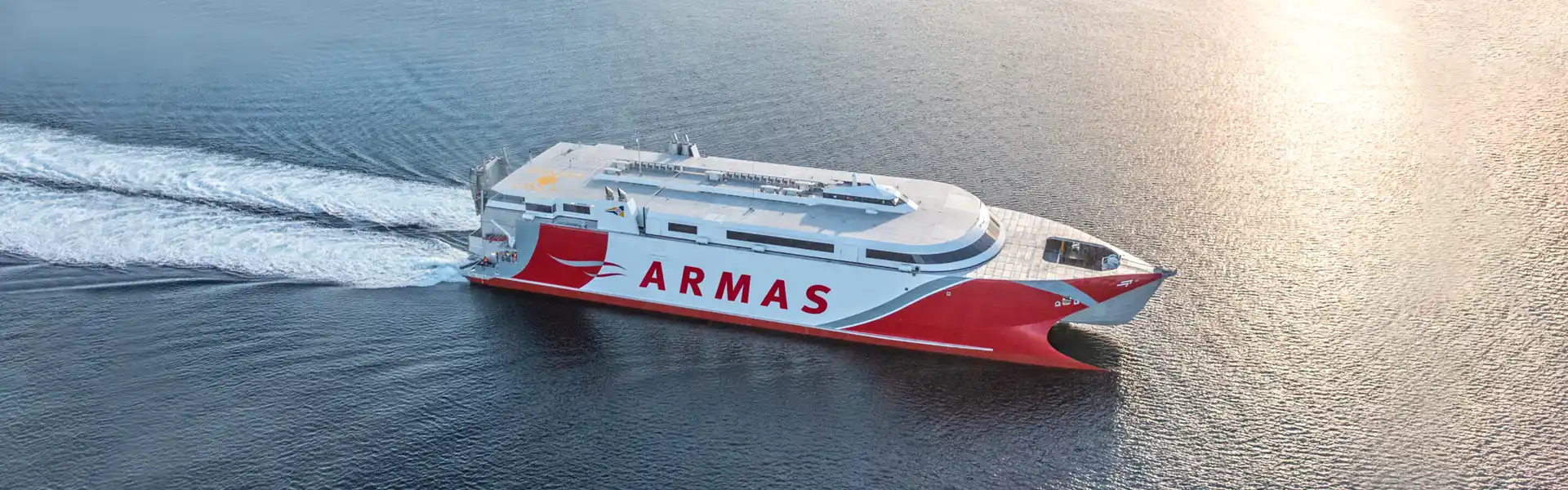
La Gomera, La Palma and El Hierro
No fast ferry links Gran Canaria directly with the three western islands. Fred. Olsen sells each as one journey with a change in Tenerife: a boat from Agaete to Santa Cruz de Tenerife, its free ferry bus across Tenerife to Los Cristianos, and a second boat.
| Island | Arrival port | Time at sea | Sailings |
|---|---|---|---|
| La Gomera | San Sebastián de La Gomera | 2 h 10 | Up to 6 a day |
| La Palma | Santa Cruz de La Palma | 3 h 50 | Up to 6 a day |
| El Hierro | Valverde | 3 h 40 | Up to 5 a day |
Fred. Olsen's figures. Add the road transfer in Tenerife: for passengers arriving from Gran Canaria, the ferry bus leaves Fred. Olsen's car park on the Muelle Ribera in Santa Cruz 1 h 45 before the Los Cristianos sailing. Book it with the ticket.
Baleària also sails from Las Palmas straight to Santa Cruz de La Palma: an 8 h 45 crossing on the days it runs, which vary by season, with cabins on some departures. Fares start at €120, or €30 for residents.
For La Gomera, Baleària sells the two legs through Tenerife as separate tickets, so you coordinate the connection and the change of port yourself (from €105 for both, €26 for residents).
Ferries to mainland Spain
- Huelva, with Fred. Olsen: from 34 hours, direct or via Tenerife depending on the date, up to 3 sailings a week. It boards at the Muelle Cambulloneros Sur in the port of Las Palmas. The free ferry buses do not serve the mainland routes.
- Cádiz, with Baleària: 36 to 38 hours, 2 sailings a week. The Thursday ferry calls at Arrecife and continues to Cádiz on the same ship; the Sunday one includes a change in Santa Cruz de Tenerife. Fares start at €124, or €31 for residents.
Agaete or Las Palmas: getting to the port
Agaete (Puerto de Las Nieves)
Fred. Olsen's Tenerife sailings, and its connections to the western islands, leave from Puerto de Las Nieves in Agaete, on the north-west coast.
Its free ferry bus leaves Parque Santa Catalina in Las Palmas 60 minutes before each sailing and brings arriving passengers back. Seats are limited: book it with the ticket or at least 48 hours ahead, and be at the stop 15 minutes early. Fred. Olsen's office at Calle Luis Morote 4, on the same square, answers questions.
With time before boarding, our Agaete guide covers the harbour, the natural pools and the valley.
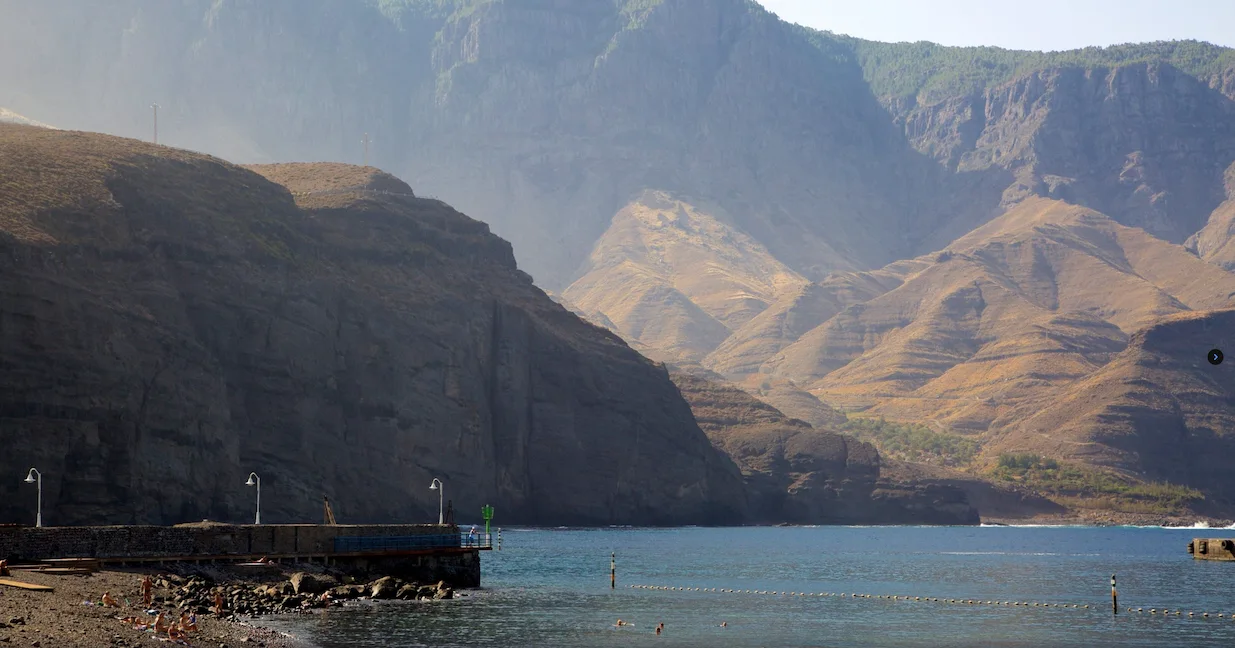
Las Palmas (Puerto de La Luz)
Every Baleària route, and Fred. Olsen's sailings to Morro Jable and Huelva, leave from the port of Las Palmas. Fred. Olsen's ticket office and boarding point are on the Muelle Grande Poniente; its Huelva ferry boards at the Muelle Cambulloneros Sur. The port is large, so check the boarding quay on your ticket.
By bus: Global's airport line 60 and its express lines 30 (from Maspalomas) and 91 (from Puerto de Mogán) end at Santa Catalina bus station, by the park where the Agaete ferry bus leaves. Times and fares are in our bus guide: from the airport and from the south coast.
Fares and the resident discount
Fares change with the date, demand, the seat or cabin and any vehicle, so treat these as starting points. They are the lowest one-way fares per passenger, without a vehicle, that each company showed on its route pages on 5 October 2026.
| Route | From, one way | Canary residents |
|---|---|---|
| To Tenerife · Baleària | €60 | €15 |
| To Tenerife · Fred. Olsen | Shown when you search a date | €11.49 |
| To Fuerteventura · Baleària | €70 | €18 |
| To Fuerteventura · Fred. Olsen | Shown when you search a date | €13.79 |
| To Lanzarote · Baleària | €112 | €28 |
| To La Gomera via Tenerife · Baleària | €105 | €26 |
| To La Palma · Baleària | €120 | €30 |
| To Cádiz · Baleària | €124 | €31 |
The resident discount is 75%: visitors pay the full fare, and residents select the discount during booking and must meet its requirements.
Fred. Olsen lets you change the date and time of any ticket free of charge within the same fare. Book with the company itself: comparison sites can help you see the options, but the operator's booking page has the final price and conditions.
Cars, hire cars, pets and luggage
- Cars: both companies carry cars, motorbikes, vans and motorhomes, subject to space on the sailing. Enter the vehicle's real dimensions when you book.
- Hire cars: many rental contracts do not let the car leave Gran Canaria, or require written permission first. Ask the rental company before you book the vehicle space; our car hire guide covers what to check in the contract.
- Pets: Fred. Olsen carries pets in shaded outdoor kennels with ventilation and a camera you can watch from the ship; reserve the place when you buy the ticket or by email up to 48 hours before. On Baleària, add the pet during booking.
- Luggage: at its ports Fred. Olsen runs a €1 luggage-trolley service: staff load the bags on board and you collect them at the destination port.
Weather, delays and cancellations
Strong wind and swell can delay or cancel sailings. Check your booking on the day of travel, and avoid a ferry back on the day of a flight home.
Under the EU rules on sea passengers' rights (Regulation 1177/2010), a sailing cancelled or delayed by more than 90 minutes entitles you to choose between another sailing and a refund. When the cause is weather that makes sailing unsafe, the company does not owe compensation or a hotel night.
Frequently asked questions
How long is the ferry from Gran Canaria to Tenerife?
80 minutes with Fred. Olsen from Agaete to Santa Cruz de Tenerife, or about 1 h 40 with Baleària from Las Palmas to Santa Cruz de Tenerife.
Which port does the ferry to Tenerife leave from?
Fred. Olsen sails from Agaete (Puerto de Las Nieves) in the north-west, with a free bus from Parque Santa Catalina in Las Palmas that you book at least 48 hours ahead. Baleària sails from the port of Las Palmas.
Is there a ferry from Gran Canaria to Lanzarote?
Yes. Baleària Canarias sails every day from Las Palmas to Arrecife, and the crossing takes about 6 hours. Fred. Olsen has no Gran Canaria–Lanzarote route.
How do I get from Gran Canaria to Fuerteventura by ferry?
From Las Palmas to Morro Jable in 1 h 45 with Baleària (3 sailings a day) or 2 h with Fred. Olsen. Baleària also sails overnight to Puerto del Rosario in about 6 h 15, Sunday to Friday.
Can I get to La Gomera, La Palma or El Hierro from Gran Canaria?
Yes, via Tenerife. Fred. Olsen sells it as one journey: a ferry from Agaete to Santa Cruz de Tenerife, its free bus to Los Cristianos, and a second ferry. Baleària also sails direct from Las Palmas to Santa Cruz de La Palma in 8 h 45.
How much is the ferry from Gran Canaria to Tenerife?
Baleària's one-way fares start at €60, or €15 for Canary Islands residents. Fred. Olsen publishes resident fares from €11.49 and shows the visitor fare when you search a date.
Can I take a hire car on the ferry?
Both companies carry cars, but many rental contracts do not let the car leave Gran Canaria, or require written permission first. Check with the rental company before you book the vehicle space.
What happens if my ferry is cancelled?
Under EU sea passengers' rights you can choose another sailing or a refund. If the cancellation is caused by weather that makes sailing unsafe, the company does not owe compensation or a hotel night.
Sources and method
Checked 5 October 2026 on the operators' own route pages. Fares and timetables change with the season, so the booking page for your date is the final word.
- Fred. Olsen Express: Gran Canaria (Agaete)–Tenerife
- Fred. Olsen Express: Gran Canaria–Fuerteventura (Morro Jable)
- Fred. Olsen Express: Gran Canaria–La Gomera
- Fred. Olsen Express: Gran Canaria–La Palma
- Fred. Olsen Express: Gran Canaria–El Hierro
- Fred. Olsen Express: Gran Canaria–Huelva
- Fred. Olsen Express: Ferry Bus
- Fred. Olsen Express: offices and ports
- Baleària Canarias: ferries to Gran Canaria
- Baleària Canarias: Gran Canaria–Tenerife
- Baleària Canarias: Gran Canaria–Fuerteventura
- Baleària Canarias: Gran Canaria–Lanzarote
- Baleària Canarias: Gran Canaria–La Palma
- Baleària Canarias: Gran Canaria–La Gomera
- Baleària Canarias: Gran Canaria–Cádiz
- EU Regulation 1177/2010 on the rights of sea passengers

By Enrique Medina · Checked 5 October 2026
Local author from Las Palmas de Gran Canaria. Routes, times and fares on this page come from the two ferry companies' own route pages; nothing is averaged or estimated.