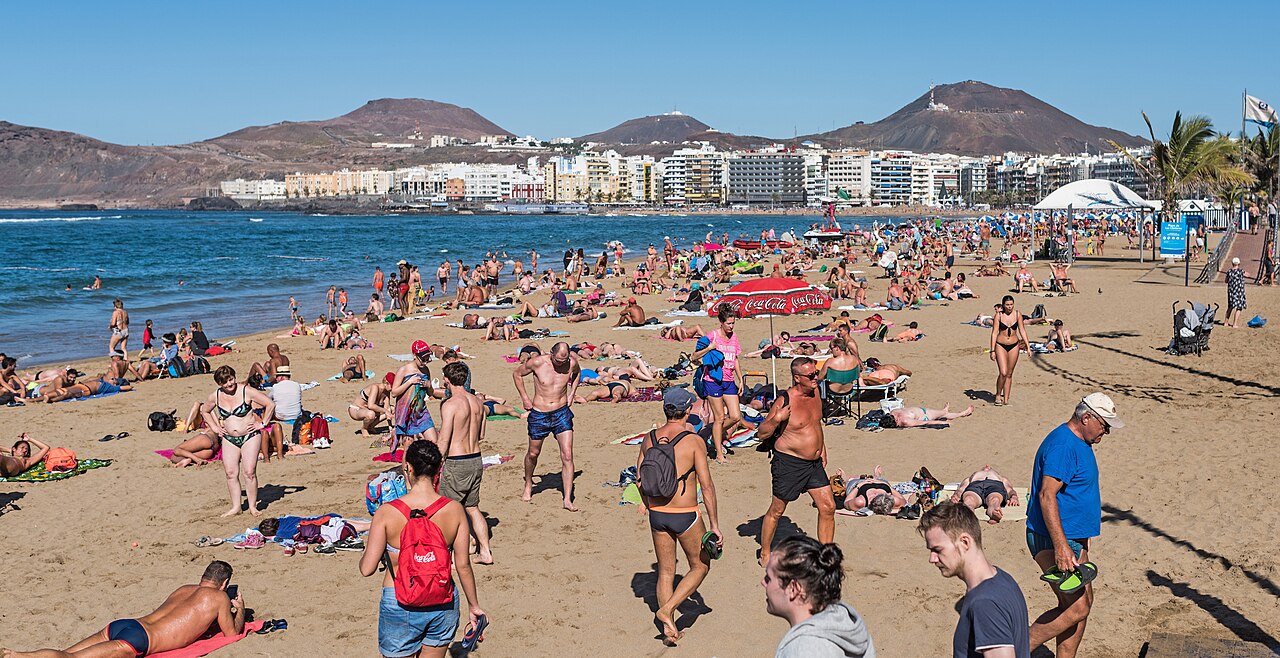
Las Canteras Beach
Three kilometres of city beach in Las Palmas, with a natural reef that leaves half the bay calm and the other half to the surf schools.
The island has around 60 kilometres of beach coastline, and the beaches are nothing like each other. The north takes the trade wind head-on; the south sits in its shelter. This guide sorts the main ones by what you actually want to do, and links the full guide to each.
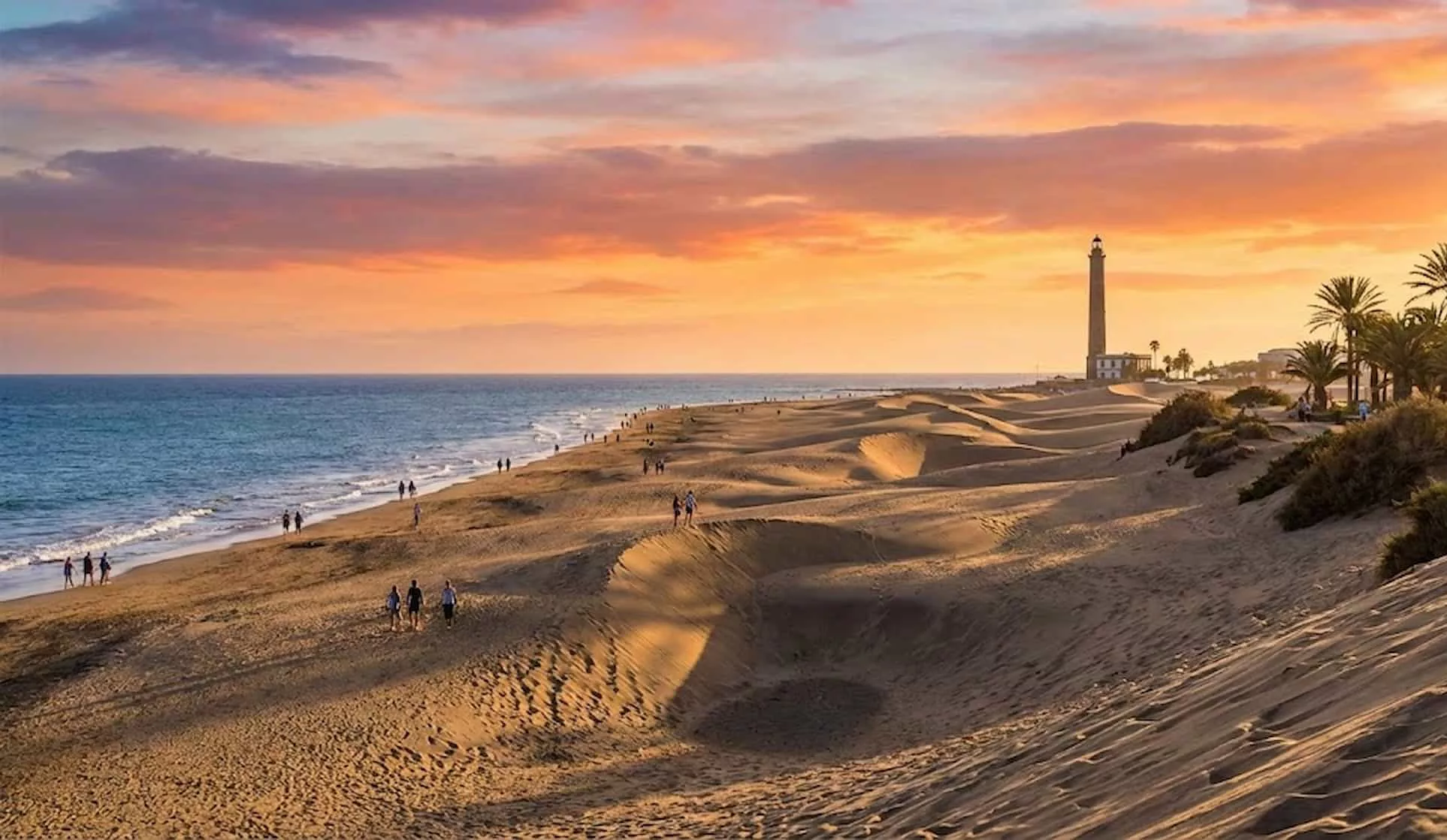
What really separates one Gran Canaria beach from another is exposure to the wind, the kind of sand, and the services you will find when you arrive.
| Beach | Where | Typical water | Good for |
|---|---|---|---|
| Las Canteras | Las Palmas (north-east) | Very calm behind the reef; open at the southern end | Families, swimming, snorkelling, beginner surf |
| Maspalomas | South | Open, light swell, wind in the afternoon | Walking, dunes, long beach days |
| Playa del Inglés | South | Much like Maspalomas, busier | Services, sunbeds, atmosphere |
| Amadores | South-west | Artificial bay, very calm water | Swimming with children, little current |
| Puerto Rico | South-west | Sheltered, marina alongside | Boat trips, services |
| Puerto de Mogán | South-west | Small and calm | Combining beach and village |
| Arguineguín | South | Quiet, barely touristy | Fish lunches, local pace |
| Agaete | North-west | Natural pools; open sea beyond | Swimming off rock, sunsets |
| El Confital | Las Palmas (La Isleta) | Exposed, rocky | Expert surf, walking |
Three kilometres of city beach in Las Palmas, with a natural reef that leaves half the bay calm and the other half to the surf schools.
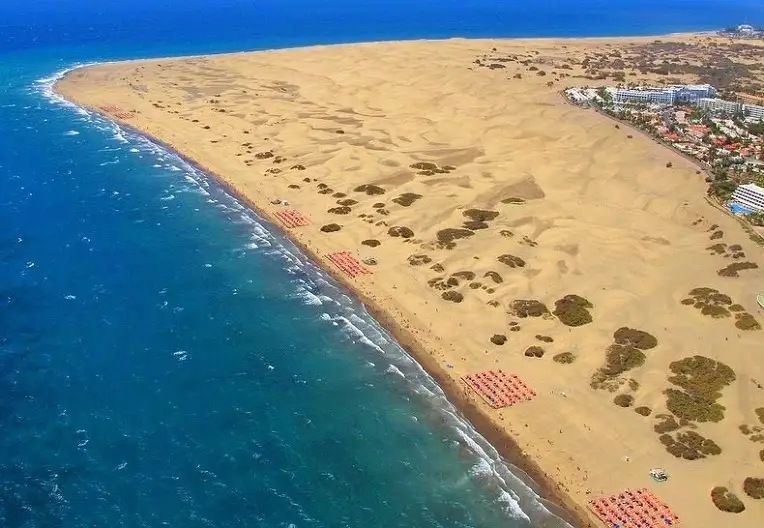
A protected reserve of sand, lagoon and palm grove in the south, with conservation rules worth knowing before you go.
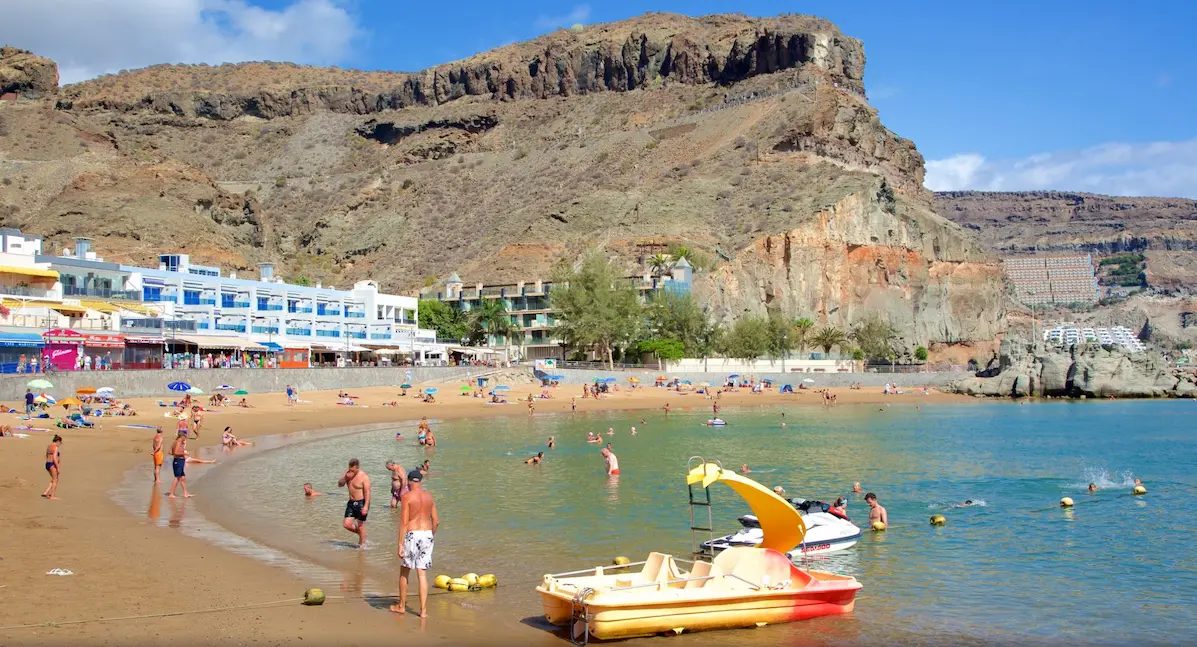
The village of canals, with a small sheltered beach and the Friday market.
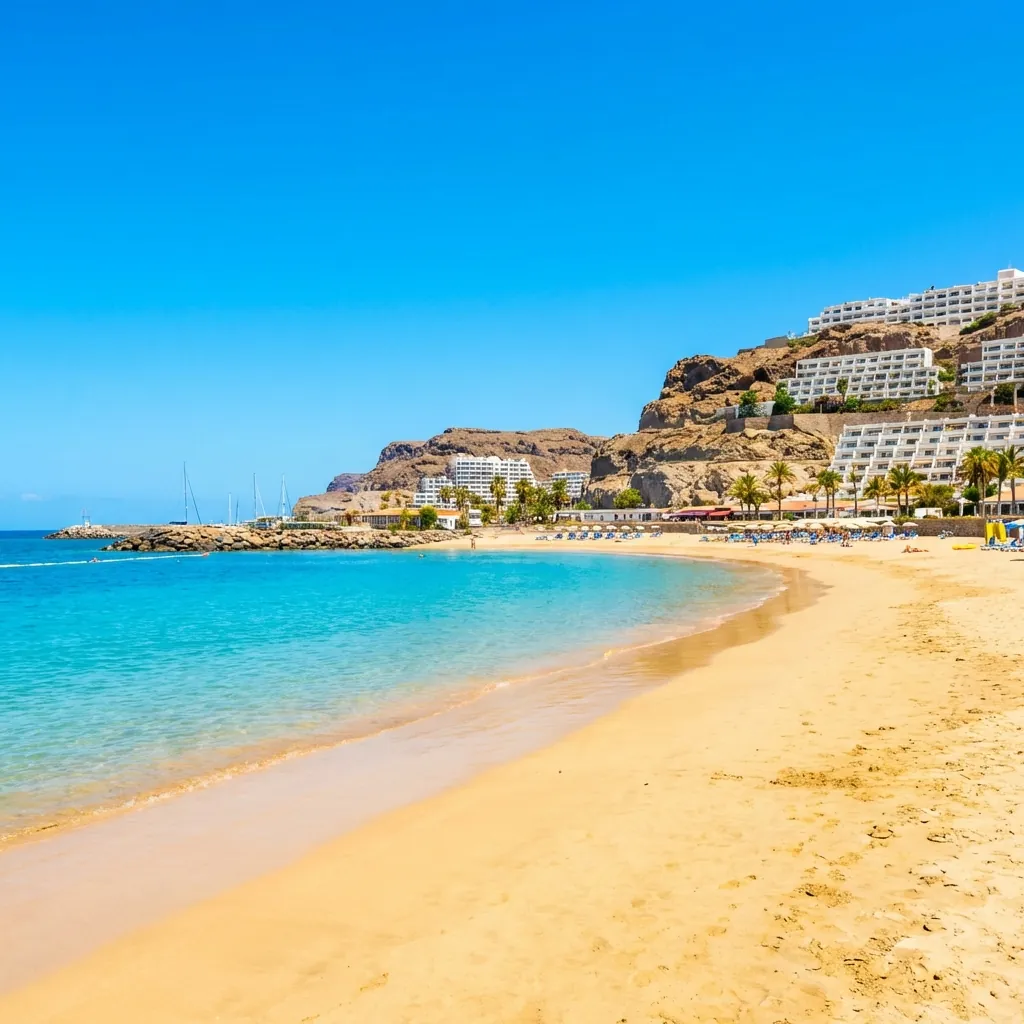
The sheltered south-west bay, and the base for most of the island's boat trips.
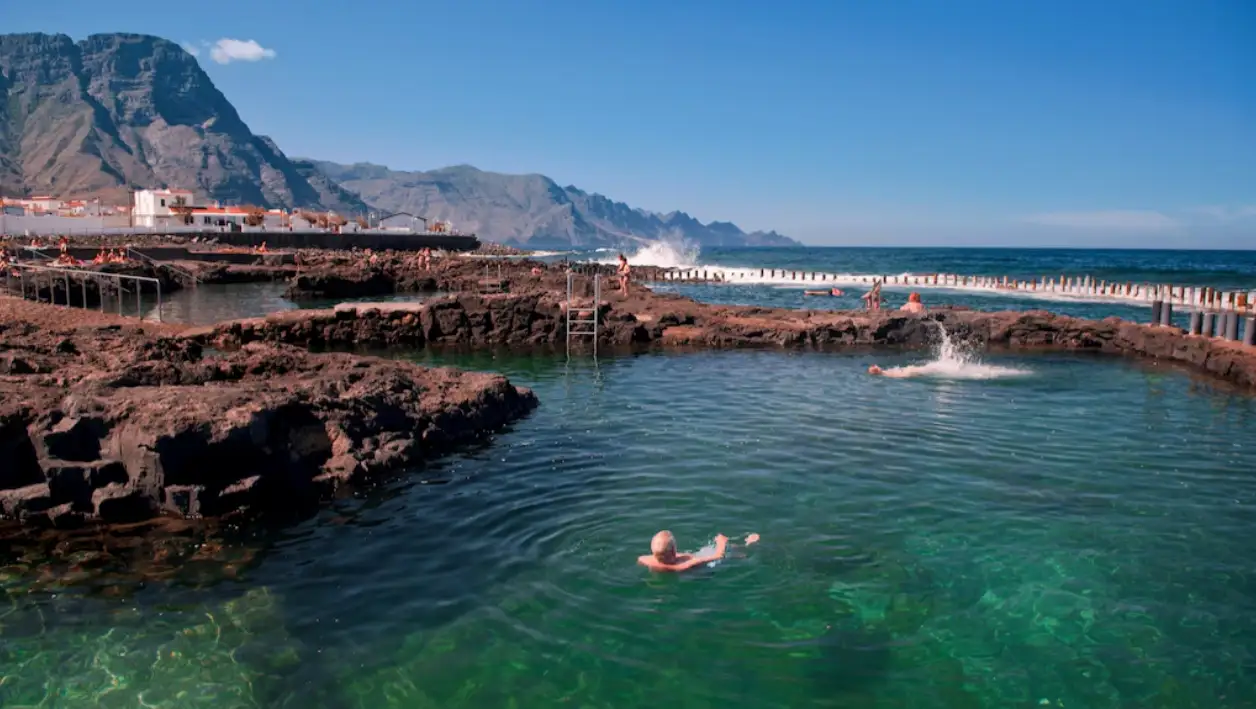
Natural pools cut into the volcanic rock of the north-west, and one of the best sunsets on the island.
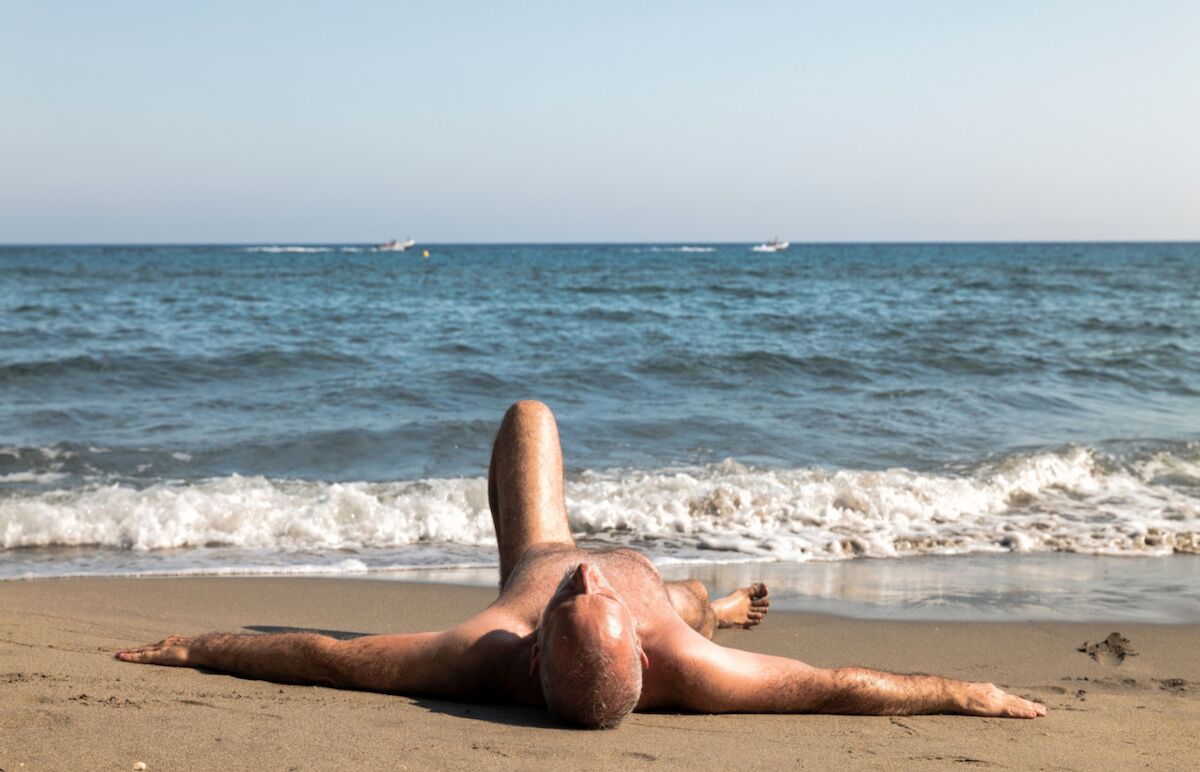
Where naturism is accepted, which stretches are mixed, and how to behave on each.
The rule that saves the most wasted afternoons is simple: the wind decides. The north-easterly trade blows for most of the year and hits the north coast head-on. A beach that looks beautiful on a map can be miserable at three in the afternoon if it is exposed, while twenty minutes away on the other side of the island the sea is flat.
The second variable is the tide, and it matters far more than visitors expect. On beaches with a reef or rock — Las Canteras, Agaete — low water uncovers pools and widens the sand, while high water shrinks the dry strip and changes the place entirely. On the open southern beaches the effect is smaller, but it still shows in how much sand you get.
The third is what you want from the day. A beach with sunbeds, a bar and parking nearby is a different proposition from a cove reached by a fifteen-minute walk. Travelling without a car, check which bus route serves it and how often: the network is good in the south and the capital, thin in the west.
The north coast is greener, windier and rougher. Its great exception is Las Canteras, sheltered by the La Barra reef, which turns much of the bay into a saltwater pool inside the city. It is the only beach on the island where you can swim in calm water, eat well and catch a city bus along the same promenade.
Further north-west, Agaete and Puerto de las Nieves trade sand for natural pools in the volcanic rock. It is not a towel-and-parasol beach: it is a place to swim in clean water and stay for the sunset, with Tenerife on the horizon on clear days.
This is where the reliable sun and the calmest water are. Maspalomas is the most singular of them: 400 hectares of protected dunes with a lagoon and palm grove, crossed by signposted boardwalks. There is plenty of sand even in August, but no shade at all and the wind picks up in the afternoon.
Westward the coast becomes a series of bays: Puerto Rico concentrates the excursion boats, Amadores is an artificial bay of very calm water that works well with children, and Puerto de Mogán offers a small beach beside a village of canals. For somewhere less touristy to eat fish, Arguineguín is still a town before it is a resort.
Parking is the weak point along this whole coast in high season. For the dunes, our guide to parking free at Maspalomas sets out the realistic options and the hours when spaces still exist.
The main beaches have lifeguards during patrolled hours and a flag system: green for open swimming, yellow for caution, red for closed. Red is not advice. On an Atlantic island where the bottom drops away fast, rip currents take strong swimmers every year.
The city and resort beaches are conventional family beaches. Naturism is tolerated or usual on particular stretches, and those are covered in the nudist beaches guide.
It depends on the day you want. For calm swimming with a city behind you, Las Canteras. For landscape and space, the Maspalomas dunes. For very calm water with children, the bay at Amadores. For swimming off rock and watching the sunset, the natural pools at Agaete.
The sheltered ones: the northern stretch of Las Canteras between Playa Grande and La Puntilla, and the Amadores bay in the south-west. Both have a gently shelving sandy entry, little current and services close by. Avoid open stretches such as La Cicer and the northern beaches when there is swell.
The south, almost always. The north-easterly trade wind dumps cloud on the north and leaves the south clear, so Maspalomas and the whole south-west coast get more hours of sun a year. When the north is overcast, crossing the island is usually enough to find sun.
Yes. The sea sits around 19-20 °C in the coolest months and the air stays mild in the south, which is exactly why it is high season for European visitors. Winter brings more wind and more swell, so the sheltered south-western beaches gain an advantage.
The main ones have walkways, ramps and, at signposted points, amphibious chairs and a bathing assistance service. Las Canteras and the large southern beaches are the best equipped. Availability depends on the season and the service's hours.
The main ones, yes. Las Canteras is in central Las Palmas and covered by city buses; Maspalomas, Playa del Inglés, Puerto Rico and Mogán are linked by Global routes. The remoter coves in the west and north effectively require a car.