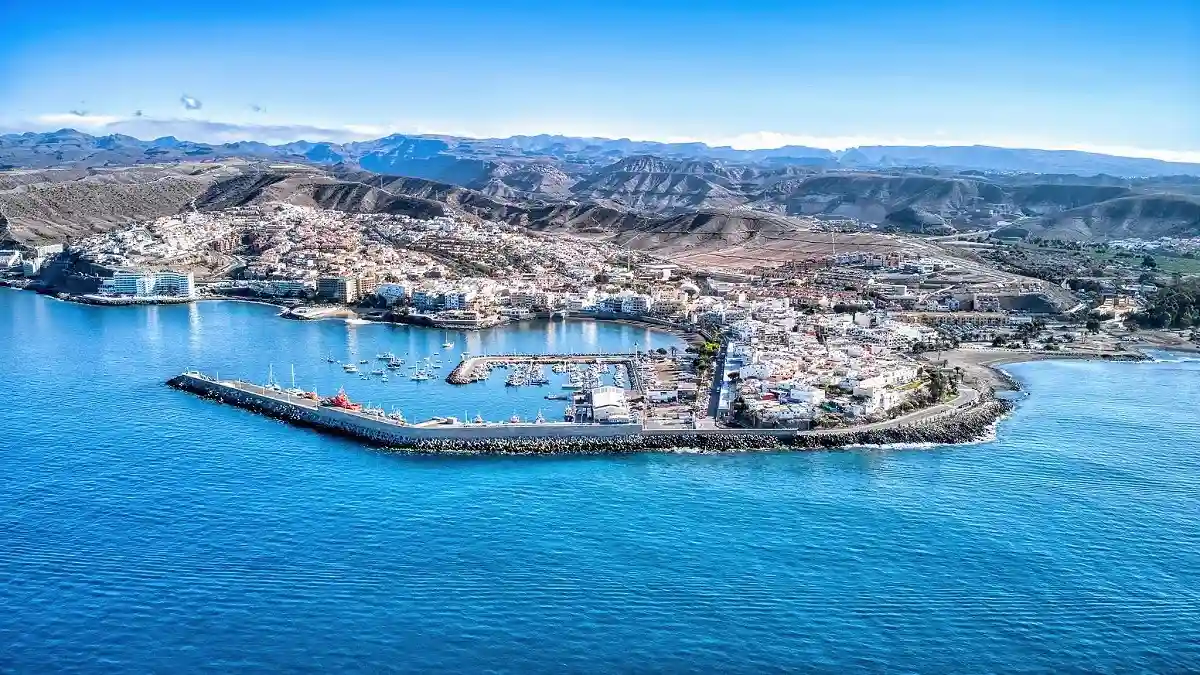
Arguineguín
The most genuine fishing town in the south
Local life and the taste of the sea
Arguineguín is not a typical resort; it is a working town where residents and visitors mix. It is home to the most important fishermen's guild in the south, which is why its restaurants get the best fresh fish on the island.
What to see and do
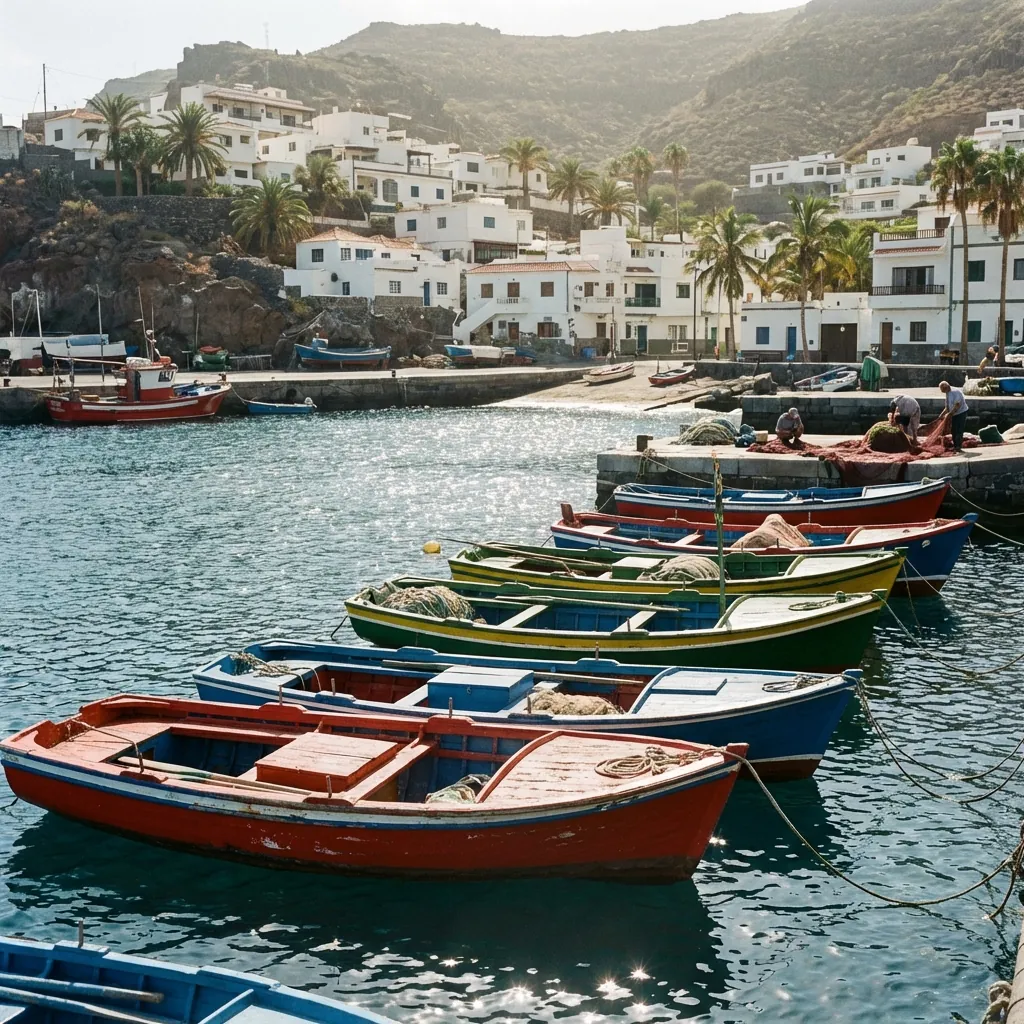
The fishing harbour
The heart of the town. Watch the brightly painted boats come in with the day's catch. A genuine, busy scene.
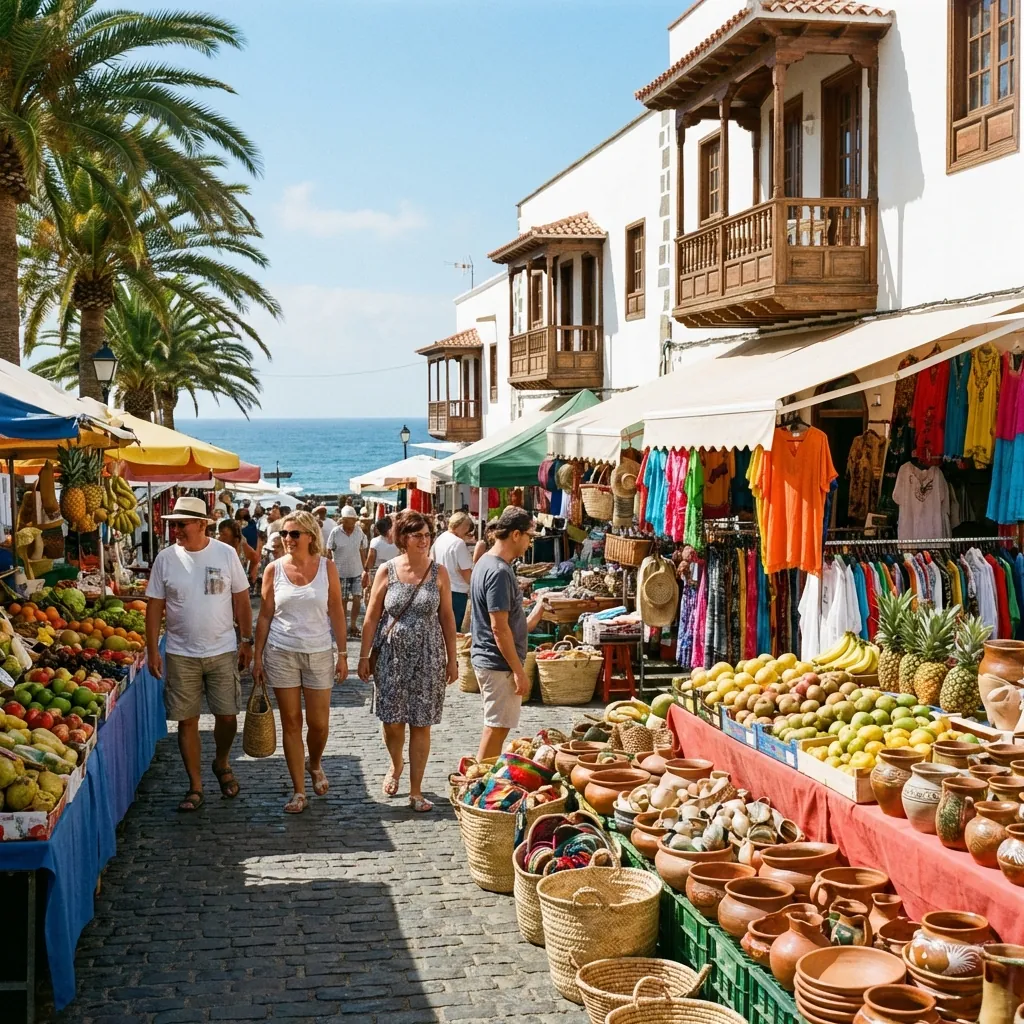
The Tuesday market
The biggest market in the area. Every Tuesday the streets fill with stalls selling local fruit, crafts and clothes. Worth planning around.
Playa de las Marañuelas
The town's main beach: dark volcanic sand and calm water sheltered by the harbour. Very family-friendly and very local.
La Lajilla sea pool
A refurbished seawater pool, good for a safe, refreshing swim with a view out over the ocean.
Practical guide
Getting there
Bus 91 / 01 (Global)
Ferry taxi (Benny Hills / Líneas Salmón)
Eating
Cofradía de Pescadores
Restaurante Los Canarios
Nearby
Anfi del Mar (2 km)
Puerto Rico (4 km)
A fishing town with a Norwegian accent
Arguineguín keeps the feel of a real fishing town, with one peculiarity: it is home to a large Norwegian community, settled enough that people affectionately call it 'little Norway'. You will find a Norwegian church, Scandinavian cafés and Norwegian newspapers alongside the old tascas. That mix, together with the fishermen's guild, gives it a character of its own in the south of Gran Canaria: touristy but genuine, quiet, and cheaper than the big resorts next door.
The ideal day in Arguineguín starts with a walk round the fishing harbour in mid-morning, when the catch is landed, and ends with a fresh fish lunch at the Cofradía de Pescadores looking out to sea. If you come on a Tuesday, do not miss the market, the largest in the south of the island. And to move along the coast, the most enjoyable option is the 'ferry taxi' (Líneas Salmón): small boats linking Arguineguín with Puerto Rico, Puerto de Mogán and Anfi del Mar every few minutes, skipping the traffic and giving you the coastline from the water.
How to plan a visit to Arguineguín
A quick plan that works
- Start at the fishing harbour and walk the seafront.
- Choose Las Marañuelas for sand and La Lajilla for a short, sheltered swim.
- Have local fish for lunch and carry on to Anfi, Puerto Rico or Mogán if you have more time.
How long to give it
Three or four hours is enough to see the harbour, walk through the centre, swim and eat. If your visit falls on market Tuesday, add at least an hour and arrive in the morning: traffic and parking get harder as the day goes on. For a full day, combine Arguineguín with Anfi del Mar, or take a coastal boat to Puerto Rico or Puerto de Mogán after checking the operator's timetable.
Getting there from the airport, and getting around without a car
Arguineguín is connected to LPA by Global lines 90 and 91, with a published fare of €4.95 for the airport–Arguineguín leg. Line 1 also runs the coastal corridor. Check the specific departure before travelling, because the lines do not share a timetable or a number of stops. The airport transfers guide compares this route with taxi, private transfer and hire car.
Where to swim: the options are not interchangeable
Las Marañuelas is the simplest choice for a few hours with sand, restaurants and town atmosphere. La Lajilla works better for a short dip when the sea is calm. Costa Alegre adds another small bathing area east of the centre. If you want pale sand, more tourist services and a postcard image, Anfi del Mar is close by — but it is a far more resort-like experience than Arguineguín.
Is it worth staying here?
Arguineguín suits anyone who values everyday restaurants, a seafront promenade, steady weather and a base that feels less manufactured than the big complexes. It is not the best choice if you want a long stretch of pale sand, nightclubs or a historic old town. To compare the feel with Puerto Rico, Mogán and Maspalomas, see the guide to where to stay in Gran Canaria.
Market Tuesday, or an ordinary day
Tuesday brings more movement, more stalls and more atmosphere, but it is not how the town normally lives. If the market is your priority, arrive early, bring a reusable bag and compare before buying: part of the offering is aimed at visitors and not everything is local produce. If you want to photograph the harbour, sit down to eat without a queue or walk without crowds, pick another morning. The rest of the week shows the residential character of Arguineguín more clearly, and it is easier to tell the fishing work from the tourist scenery.
What to order to eat like the town does
Ask what fish came in that day rather than settling for the first translated menu. Vieja, sama, cherne, squid, limpets or grilled fish may appear depending on season and supply. Ask whether the price is per portion or per weight, especially with whole fish. A side of papas arrugadas, mojo and a simple salad lets you try Canarian cooking without turning lunch into an endless list. Our guide to traditional Gran Canaria food helps you recognise the dishes, cheeses and desserts.
Walking, accessibility and the heat
The seafront and most of the centre are walkable, but some streets climbing towards the residential areas are steep. For a short visit you never need to leave the harbour–promenade–beaches axis. If you are travelling with a pushchair or have reduced mobility, check the specific access to La Lajilla and the state of the sea; a sea pool does not offer the same conditions every day. Between eleven and four there is little shade on some stretches, so alternate walking, swimming and a stop under a roof rather than walking it all in one go.
How to combine Arguineguín without spending the day driving
The most logical pairing is Arguineguín and Anfi del Mar: a lived-in town against a carefully maintained resort beach. Puerto Rico works better if you want to add a marina, shopping or a boat trip; Puerto de Mogán takes more time but rounds the day out with canals, beach and resort architecture. Do not try to rush all four. Two well-chosen stops leave time to swim and eat, while an itinerary of car parks produces a lot of photos and very little of a day.
Honest advice before you go
- The harbour is a workplace: do not block accesses or photograph people close up without asking.
- Check the state of the sea before using natural pools or rocky areas.
- Do not promise the group a Caribbean beach: the character of Las Marañuelas is its dark sand and local feel.
- At the market, look after your wallet and phone as you would anywhere busy.
- If you are heading back to the airport, allow extra time for GC-1 traffic and bus stops.
The best light, weather and time to take photographs
The south-west gets a lot of clear days, but midday light flattens the colours and pushes the contrast between façades and shade. For boats, promenade and coast, the first part of the morning gives you fewer people and a more natural working scene. Late in the afternoon, stand on the promenade facing the sea to catch warm light over the harbour. Do not enter operational areas, and do not fly a drone without checking restrictions and permits: a spot being visible from the street does not make it a recreational space. On calima days, lower your expectations of distant views and look for detail in the town instead. For swimming, the best hour depends more on wind, tide and flags than on any fixed recommendation; look at the actual conditions before getting in.
Transport information checked on 2 August 2026 against Aena and Global. Confirm timetables before setting out.

Reviewed by Enrique Medina
Local author, Las Palmas de Gran Canaria.
Frequently asked questions about Arguineguín
Which day is the Arguineguín market?
Tuesday mornings, roughly 08:00 to 14:00. It is the largest street market in the south of Gran Canaria, with stalls of local fruit, clothes, crafts and souvenirs. Arrive early to park and to avoid the midday heat.
How do I get to Arguineguín?
By car it is about 25 minutes from the airport on the GC-1. By guagua (bus), Global lines 91 and 01 connect it with Las Palmas, Maspalomas and Puerto Rico. From other places along the coast, the Líneas Salmón 'ferry taxi' is a comfortable and scenic alternative.
Where do you eat the best fresh fish?
At the restaurants by the harbour and, above all, at the Cofradía de Pescadores, where the fish comes straight off the boats. Order vieja (the most characteristic Canarian fish), sama or cherne, with papas arrugadas and mojo. It is some of the best value in the south.
What are the beaches in Arguineguín like?
The main beach, Las Marañuelas, has dark volcanic sand and calm water sheltered by the harbour — very family-friendly. There is also the La Lajilla sea pool, good for a safe swim. A few kilometres away, Anfi del Mar has a beach of white sand brought from the Caribbean.
Is it a good place for dolphin and whale watching?
Yes. The waters between Arguineguín and Mogán are among the best in the Canaries for cetaceans. Boat trips leave from the harbour and from nearby Puerto Rico all year; bottlenose dolphins are common and, with luck, pilot whales.
Keep exploring the south of Gran Canaria:
Gallery
Looking for a different beach? Compare all the beaches of Gran Canaria by swell, wind and facilities.