Vegueta, Gran Canaria
Where Spain met the New World
Walk the same cobbled streets Columbus walked
Don't miss
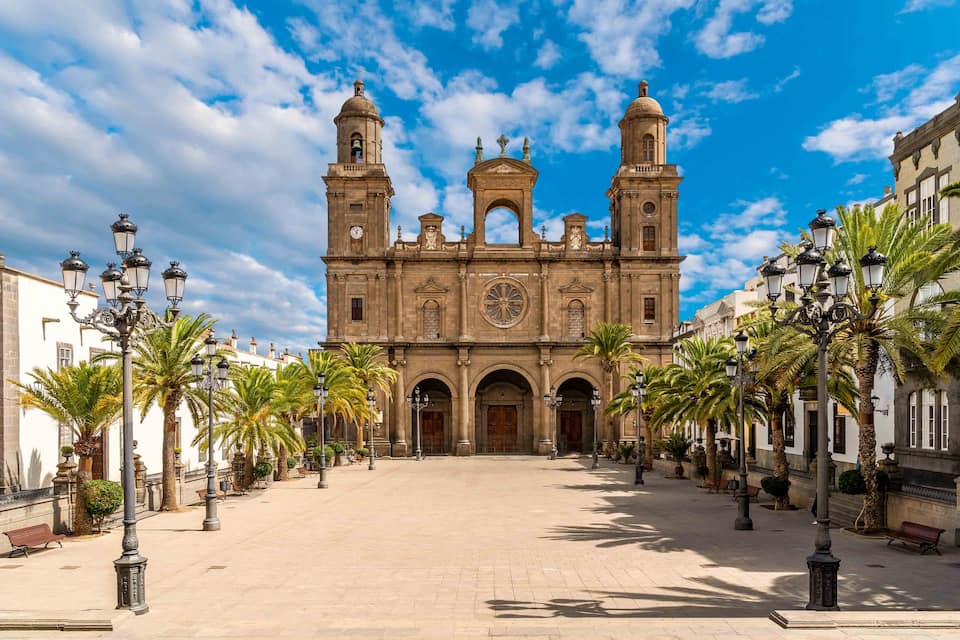
1. Cathedral and Plaza Santa Ana
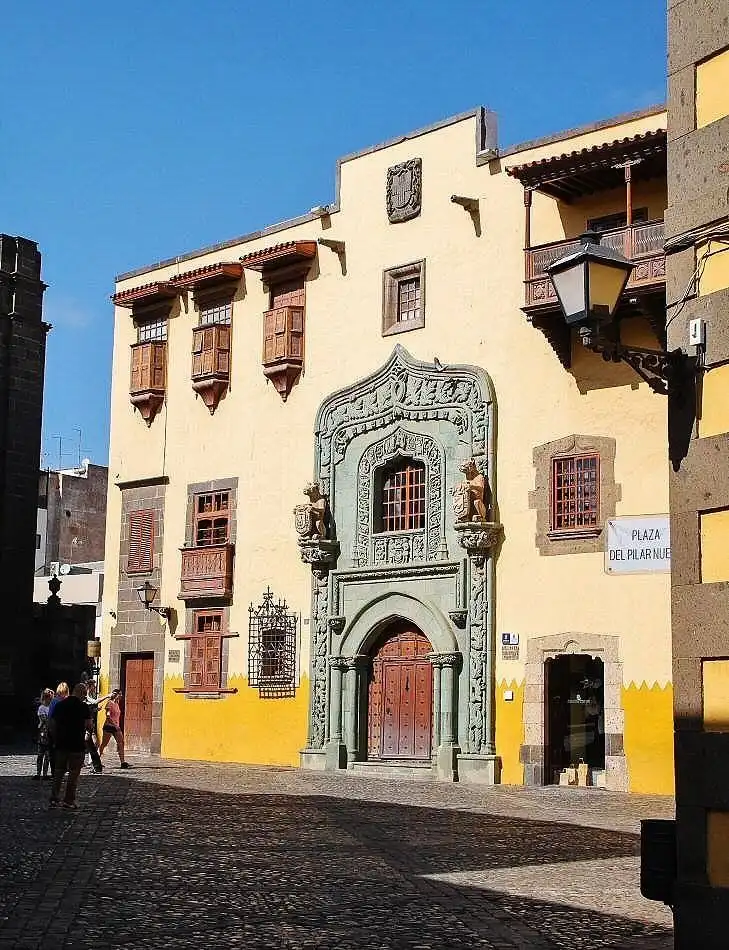
2. Casa de Colón
3. Museo Canario
How long
2–3 hours for the essentials.
Half a day with the museums.
Best time
Mornings (cooler) or
Thursday evening (tapas route)
Where the history of Gran Canaria began
Vegueta is the founding quarter of Las Palmas de Gran Canaria and the best-preserved historic centre in the Canary Islands. Its cobbled streets and quiet squares hold more than five centuries of history, from the Castilian conquest to the present day, by way of Columbus's stop on his voyage to the Americas. Walking through Vegueta takes you back to where the city started.
Colonial architecture
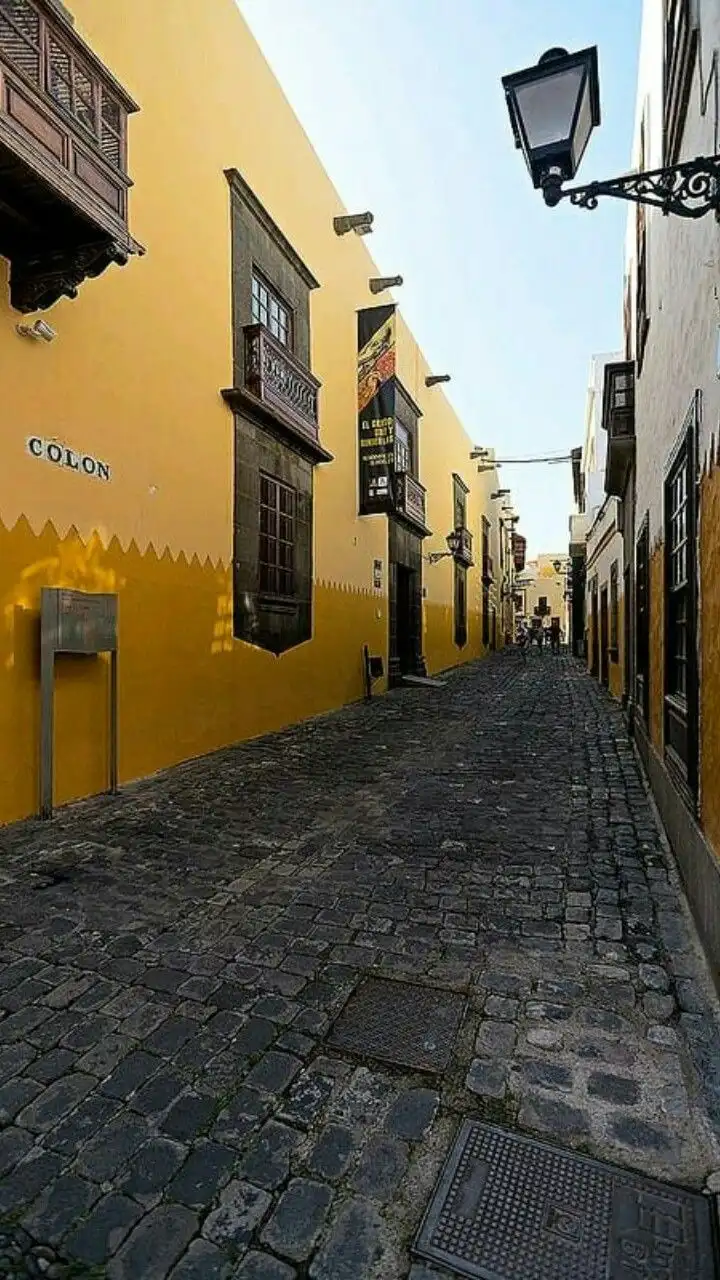
Merchant houses with Canarian wooden balconies and interior courtyards
Museum district
Casa de Colón, CAAM, Museo Canario and a string of art galleries
Local food
A traditional tapas route and a historic market selling local produce
Vegueta in pictures
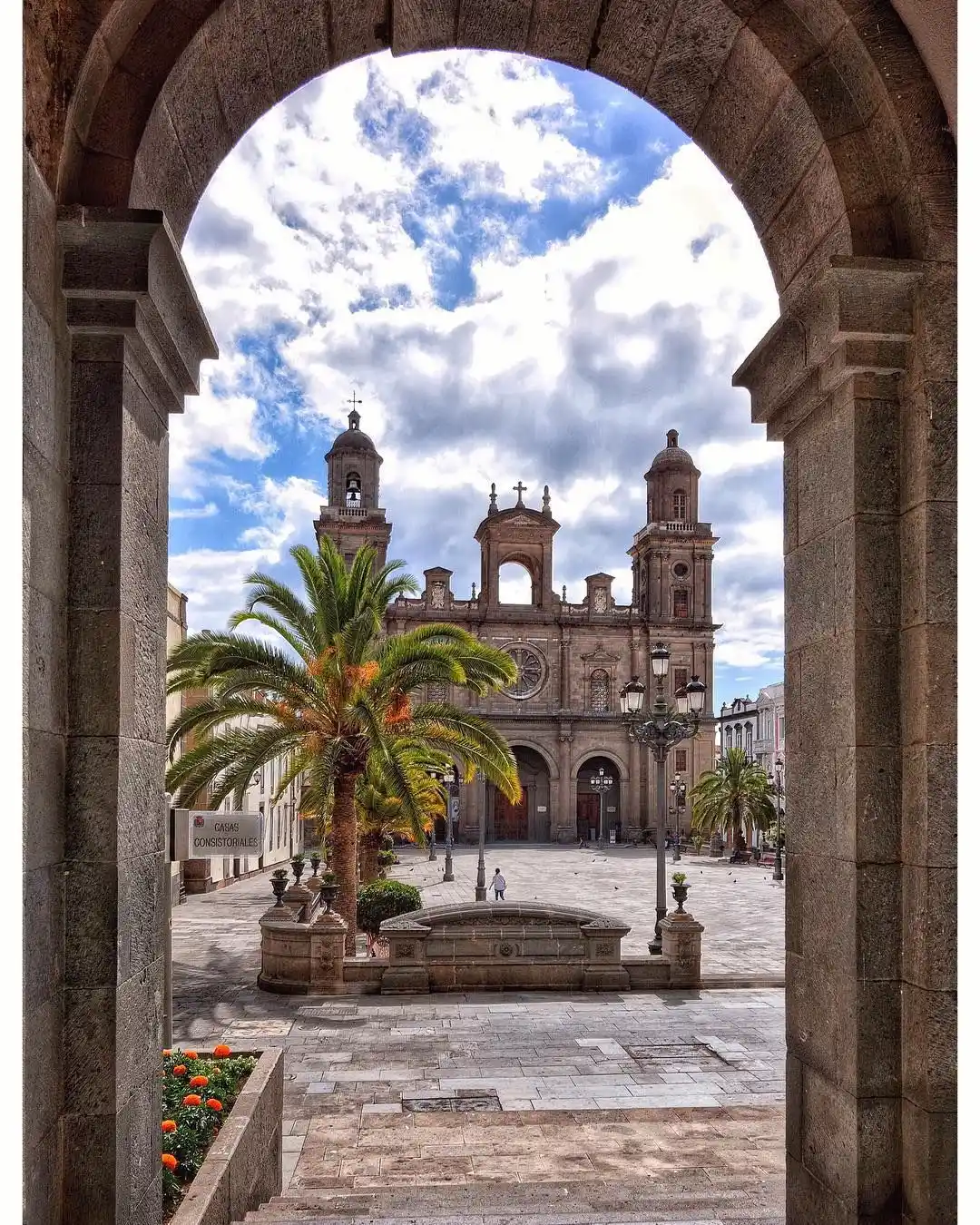
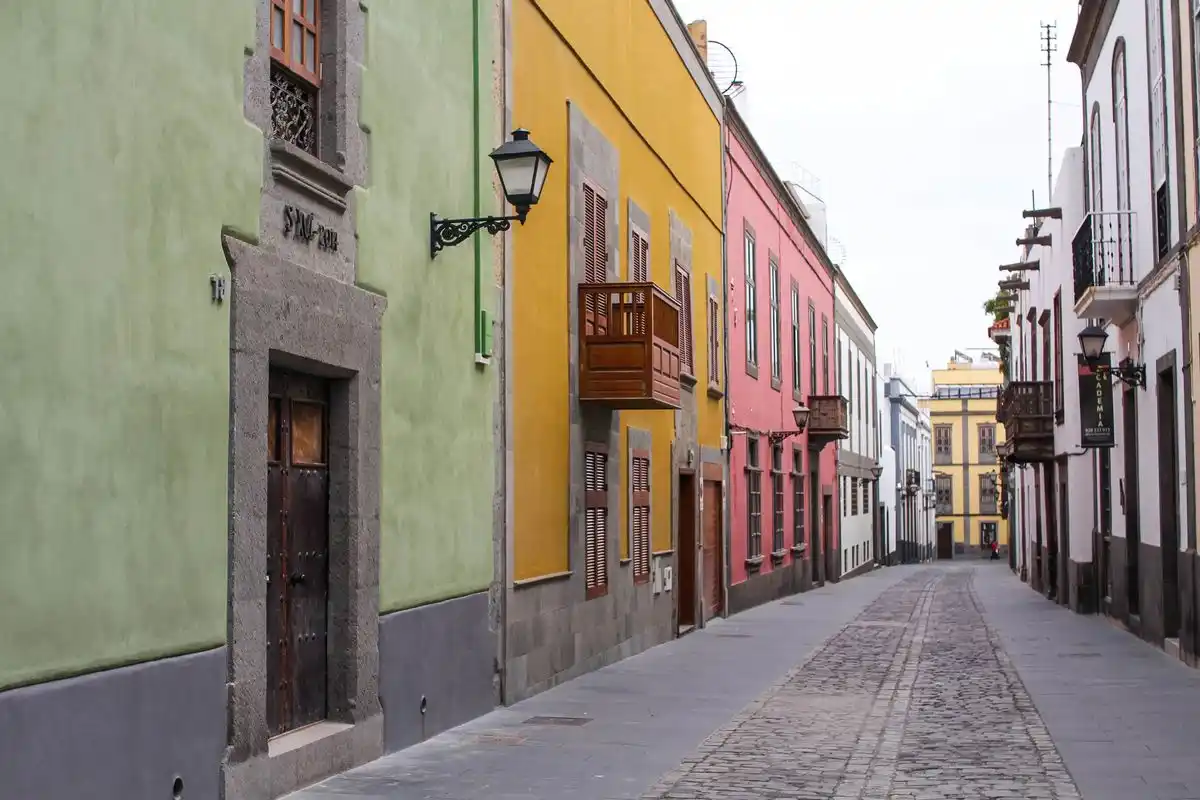
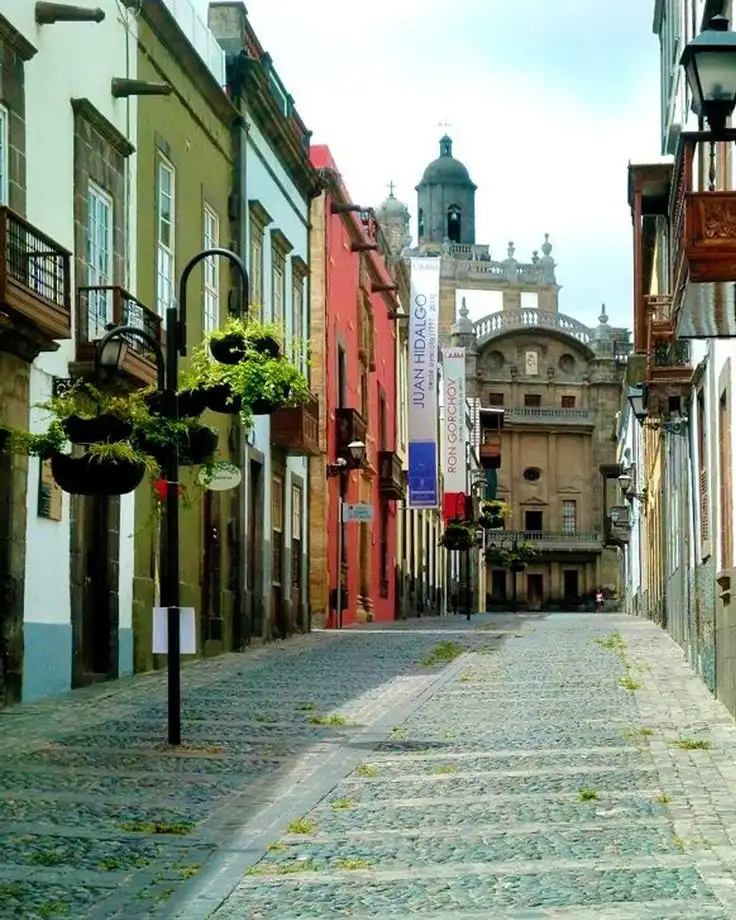
Swipe for more
Historical timeline
Explore the timeline (1478 – today)
1478
Las Palmas is founded
Juan Rejón establishes the Real de Las Palmas beside the Guiniguada ravine
1492
Columbus in Las Palmas
Christopher Columbus stops in Gran Canaria to repair the Pinta before crossing the Atlantic
1500-1600
The golden age
The cathedral, Casa de Colón and the main merchant houses are built
1990
World Heritage candidate
UNESCO adds Vegueta to its tentative list of World Heritage sites
Plaza de Santa Ana
Plaza de Santa Ana became the model for the urban layouts later used in many cities across the Americas. Intended as the main square from the moment it was built, it was conceived as a civic and administrative space. Around it stand the Santa Ana cathedral, the Bishop's Palace, the Provincial Historical Archive and the town hall buildings, opened in 1856.
The dogs of the square
Eight cast-iron figures painted bronze green stand guard in front of Santa Ana cathedral. They are the dogs of Plaza de Santa Ana. They have been here since the end of the 19th century and have become one of the symbols of the city, faithful guardians of both the open square and the cathedral behind it.
The landmarks you should not miss in Vegueta
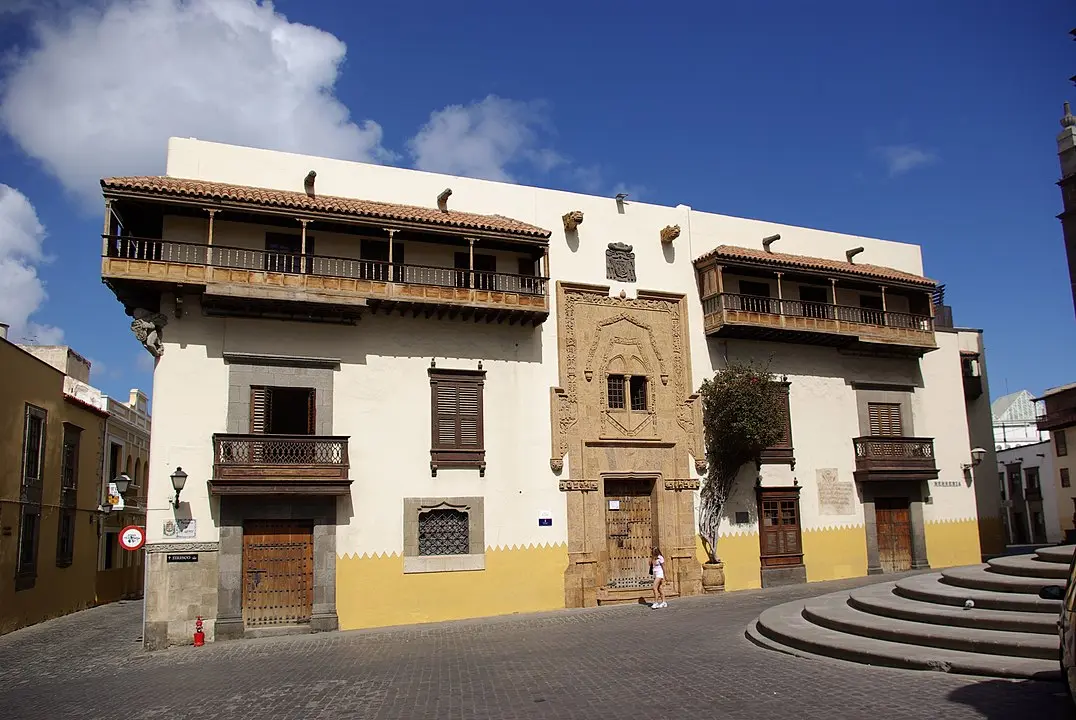
Casa de Colón
One of the most recognisable buildings in Gran Canaria, standing where the city was founded on 24 June 1478. More than 500 years old, the museum researches and explains the history of the Canaries and their links with the Americas, with sections on Columbus's expeditions.
Official site
·
Wikipedia
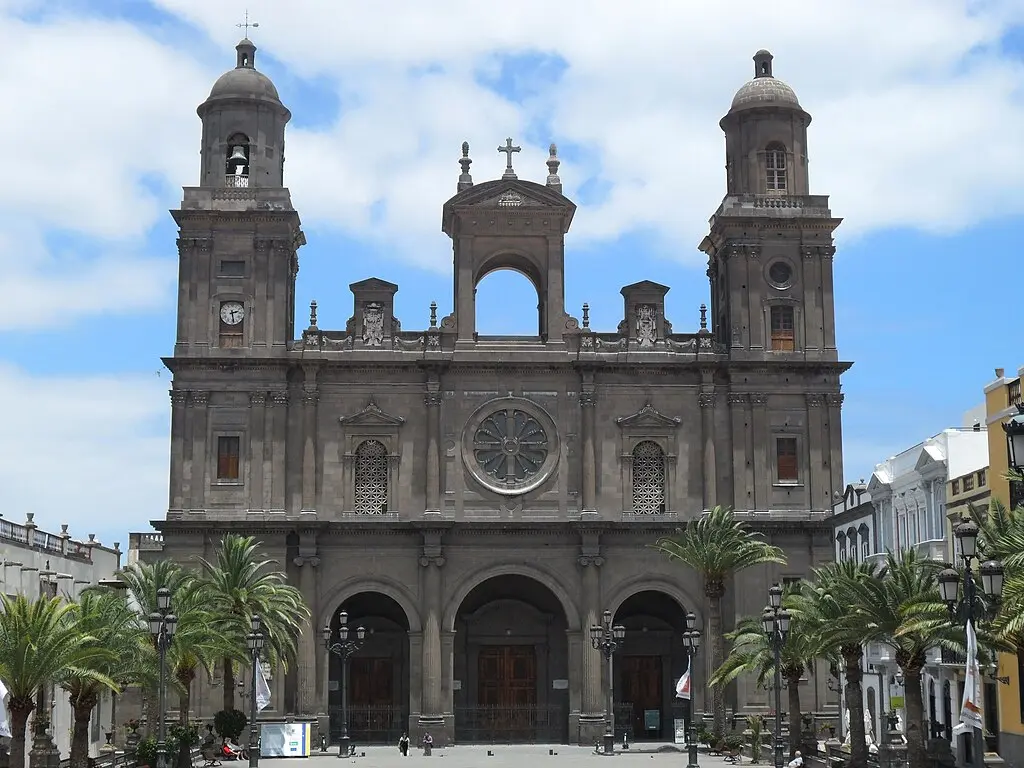
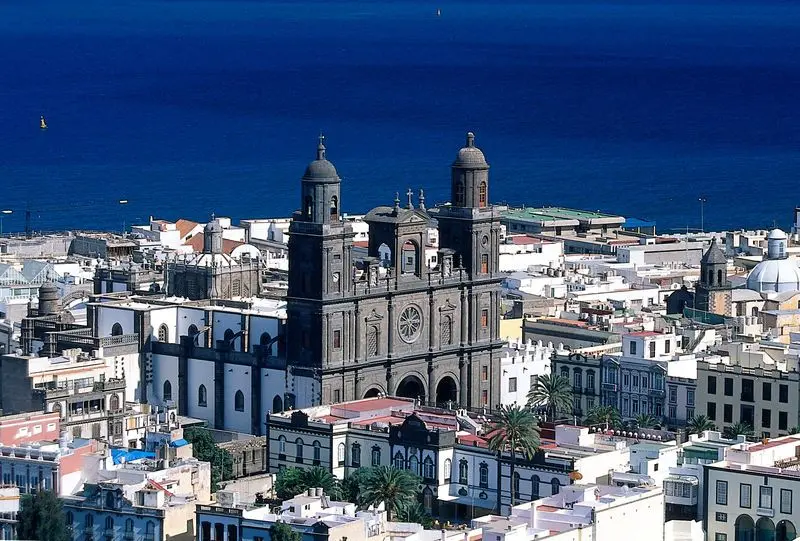
Santa Ana cathedral
Begun in 1500, it mixes Gothic, Renaissance and neoclassical work. You can go up the tower for wide views over Las Palmas.
Official site
·
Our cathedral guide
·
Wikipedia
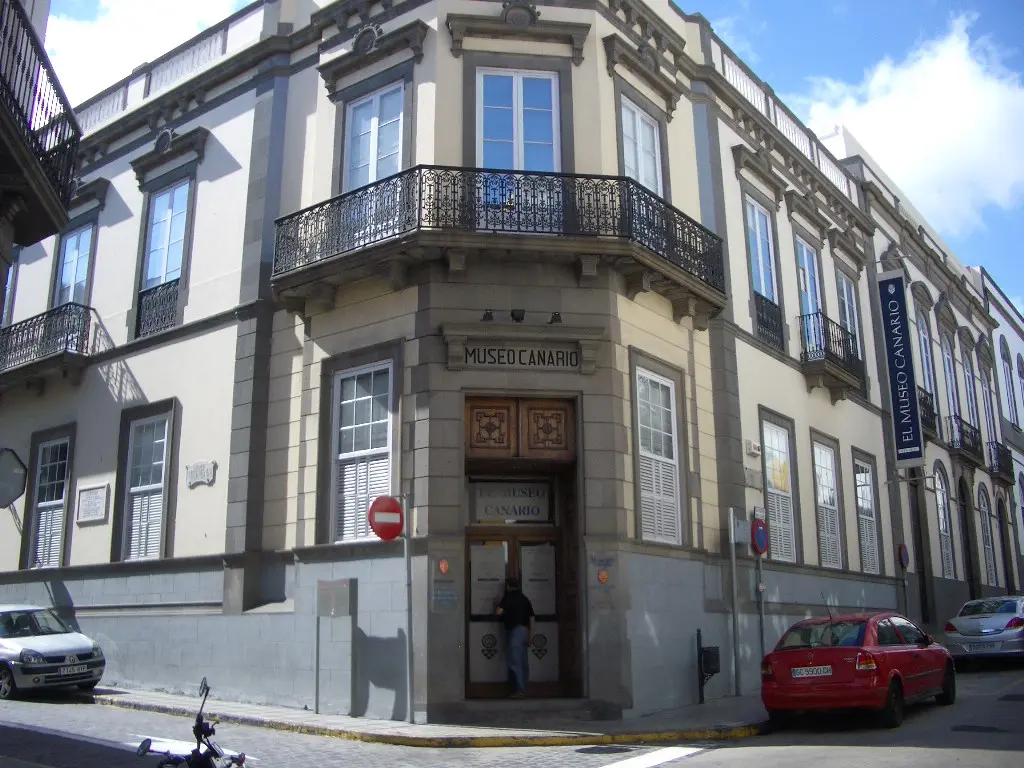
Museo Canario
A scientific and cultural institution founded in 1879, devoted to research into the prehistory and history of the Canaries. It holds a wide collection on the indigenous population of Gran Canaria and is the largest specialist centre in the archipelago.
Official site
·
Wikipedia
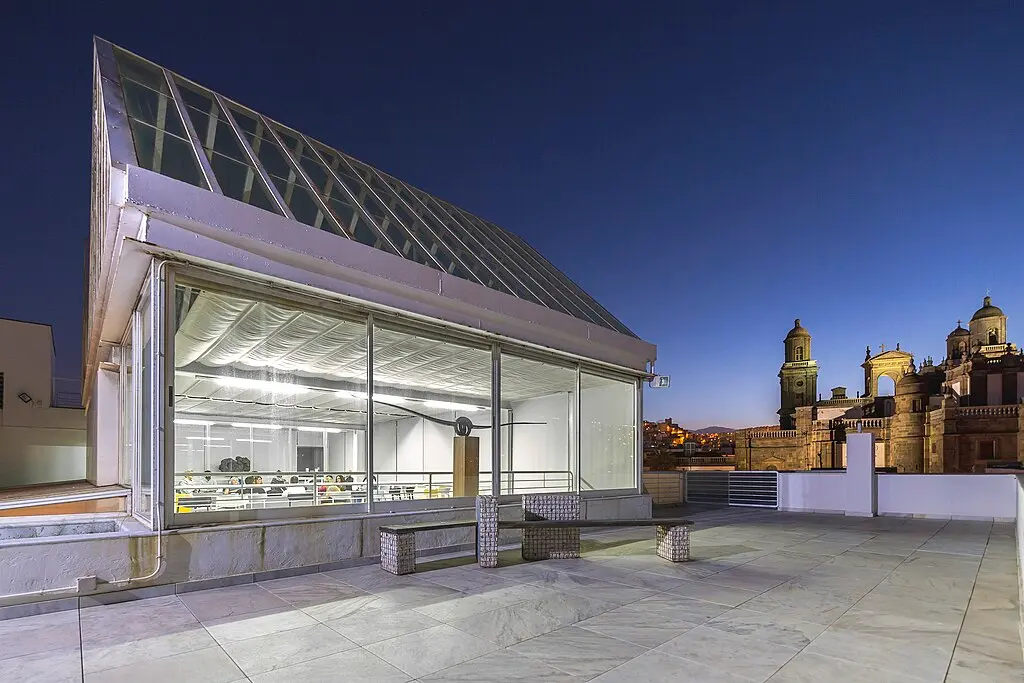
CAAM
Centro Atlántico de Arte Moderno. Contemporary art across three continents — Africa, the Americas, Europe.
Official site
·
Wikipedia
Where the landmarks are
A walking route through Vegueta
The full historic route
2–3 hours • 2.5 km • Easy
Plaza de Santa Ana
Starting point. Cathedral, town hall buildings, the dog sculptures
Calle de los Balcones
The best colonial architecture, with balconies of Canarian pine
Plaza del Pilar Nuevo
Casa de Colón and the historic fountain. Coffee stop on the terraces
Plaza de Santo Domingo
Church and a quiet square. Museo Canario on the corner
Plaza del Espíritu Santo
Historic chapel and a square with terraces. A bohemian corner
Mercado de Vegueta
Traditional market with local produce. Good for tapas
Route map
Where to eat in Vegueta
Traditional tapas
Fine dining
Practical information
Getting there
- Buses (guaguas): Lines 12, 13, 17, 301 · from the airport: Global line 60 or 91
- Parking: Plaza Hurtado de Mendoza, Mercado de Vegueta
- Taxi: about €30–35 from the airport
When to come
- Mornings: fewer visitors, museums open
- Thursday afternoon and evening: the tapas route
- Sunday mornings: craft market and a local crowd
Visiting tips
- • Wear comfortable shoes for the cobbles
- • Combine the visit with the Triana quarter, across Calle Mayor
- • Most museums close on Mondays; check opening times
- • Book a table for dinner, especially at weekends
What Vegueta is actually like
Vegueta is not just a set of monuments: it is a living quarter where old and new sit together without much fuss. In the morning, residents buy fruit at the Mercado de Vegueta while the first visitors find the shaded squares. At midday the smell of specialty coffee mixes with Canarian cooking on the terraces of Plaza del Espíritu Santo. And in the evening, Thursdays above all, Vegueta becomes the place Las Palmas goes out to eat, on its well-known tapas route.
Columbus and Vegueta
In 1492 Christopher Columbus stopped in Gran Canaria on his first voyage to the New World. The Pinta needed repairs, and Columbus used the stop to take on water and supplies in Vegueta. Casa de Colón, now a museum, occupies the site where the navigator is believed to have stayed. The episode made Vegueta a fixed point on the route between Europe and the Americas, a role the quarter kept for centuries through Atlantic trade.
The best time to visit Vegueta
Thanks to the subtropical climate of Gran Canaria, Vegueta works all year. Temperatures in Las Palmas run between about 18 °C in winter and 26 °C in summer, which makes walking the old town comfortable in any season. Spring (March to May) brings long, bright days that suit photography. Autumn avoids the summer crowds. And over Christmas, Vegueta fills its squares with handmade nativity scenes and cultural events.
Vegueta and Triana: two quarters, one walk
Vegueta and Triana are the two historic quarters of Las Palmas de Gran Canaria, separated by the old bed of the Guiniguada ravine. Vegueta keeps the religious and institutional character of the founding city — cathedral, museums, formal squares — while Triana is the shopping quarter, built around the pedestrianised Calle Mayor de Triana. The obvious move is to do both in one walk: crossing from Plaza de Santa Ana into Triana along Calle Mayor takes you from five centuries of history to the best shops and cafés in the city in about ten minutes.
Frequently asked questions about Vegueta
Is Vegueta worth visiting?
Yes. Vegueta is one of the best-preserved historic quarters in the Canary Islands. Founded in 1478, it has the Casa de Colón, Santa Ana cathedral and streets of worn cobbles. It is a candidate for UNESCO World Heritage status and one of the main cultural attractions on Gran Canaria.
What is Vegueta known for?
Vegueta is known for its colonial architecture, its historic squares, Casa de Colón, Santa Ana cathedral, the Museo Canario and the CAAM modern art centre. It is also known for the Thursday-evening tapas route and the Sunday craft market.
How do you get to Vegueta?
You can get to Vegueta by guagua (local bus) on lines 12, 13, 17 or 301. From the airport, Global line 60 or 91 stops at Teatro Pérez Galdós and San Telmo (€2.30), both in Triana, next to Vegueta. A taxi from the airport costs about €30–35. There is paid parking at Plaza Hurtado de Mendoza and at the Mercado de Vegueta car park.
How long do you need for Vegueta?
A walk round the essentials takes two to three hours. If you plan to go into the museums (Casa de Colón, Museo Canario, CAAM), set aside half a day.
Is Vegueta free to visit?
Walking round Vegueta and enjoying its streets, squares and architecture is completely free. The museums charge separately: Casa de Colón €4 (free on Sundays), cathedral free entry, Museo Canario €5, and CAAM free.
Where should you eat in Vegueta?
Among the better-known places in Vegueta are La Azotea de Benito (creative tapas), El Herreño (traditional Canarian cooking), Deliciosa Marta (signature cooking), El Vasco de Vegueta and Café Regina (specialty coffee). The Thursday tapas route is a fixture for locals.
When is the best time to visit Vegueta?
Mornings are best for fewer people and cooler air. Thursday evenings are the night for the tapas route. On Sunday mornings there is a craft market with a local crowd. The mild climate of Gran Canaria means Vegueta works all year.
See the living history of Gran Canaria
Go with a local guide so you do not walk past the details of Vegueta
More questions
How do I get to Vegueta Gran Canaria?
You can reach Vegueta by local bus (guagua) lines 12, 13, 17, or 301. From the airport, Global line 60 or 91 stops at Teatro Pérez Galdós and San Telmo (€2.30), both in Triana, next to Vegueta. By taxi from the airport it costs approximately €30–35. There is paid parking at Plaza Hurtado de Mendoza and the Vegueta Market car park.
How long does it take to visit Vegueta Gran Canaria?
A walking tour of the essential sights in Vegueta takes 2–3 hours. If you plan to visit the museums (Columbus House, Canarian Museum, CAAM), allow half a day.
What are the best restaurants in Vegueta Gran Canaria?
Well-known restaurants in Vegueta include La Azotea de Benito for creative tapas, El Herreño for traditional Canarian cooking, Deliciosa Marta for signature dining, El Vasco de Vegueta, and Café Regina for specialty coffee. The Thursday tapas route is a local fixture.