Las Palmas Cathedral
The Most Important Monument of Canarian Religious Architecture
Seat of the Roman Catholic Diocese since 1570
A Masterpiece in the Heart of Las Palmas
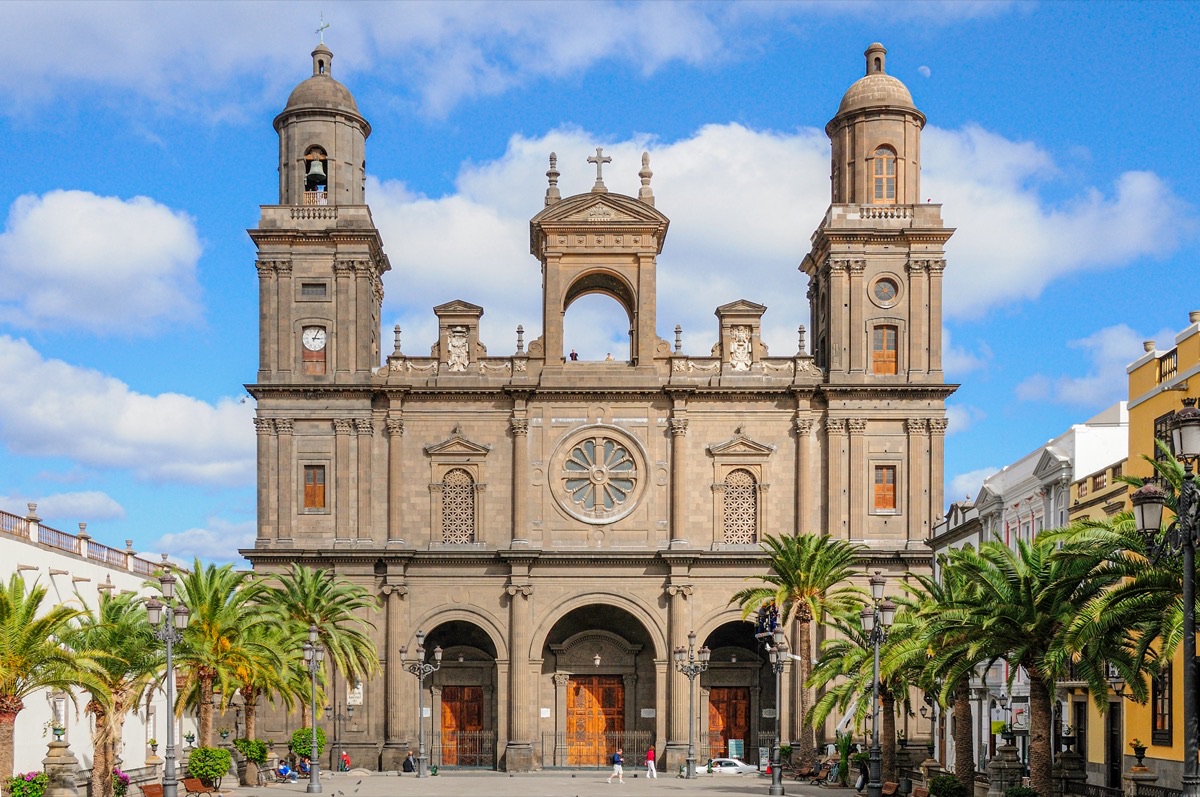
The Cathedral of Santa Ana (Holy Cathedral-Basilica of Canary or Cathedral of Las Palmas de Gran Canaria) is a Roman Catholic church located in Las Palmas, Canary Islands. As the see of the Roman Catholic Diocese of Canarias, it stands triumphantly within the Vegueta neighborhood, directly facing the historic Plaza Mayor of Santa Ana.
The feast of the cathedral's dedication is celebrated every November 26. Today, the structure is universally considered the most important monument of Canarian religious architecture.
Remarkable Interior Architecture
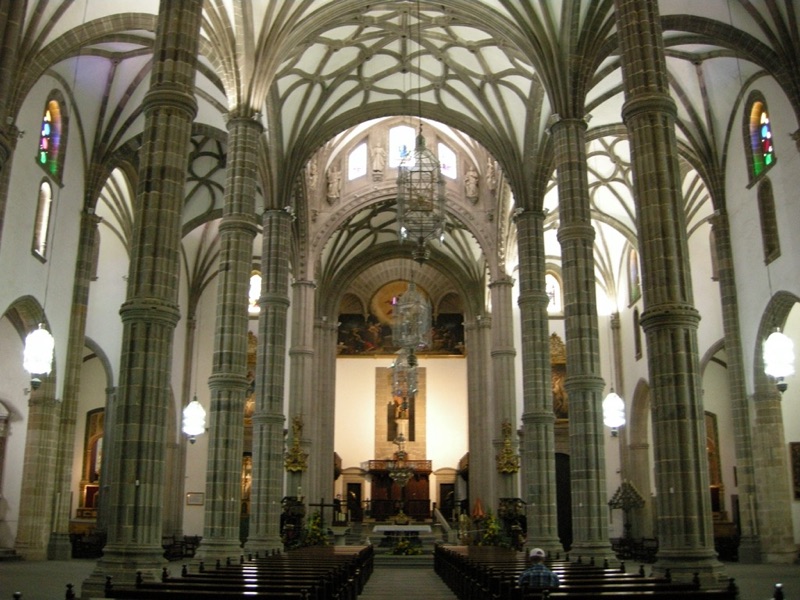
Designed primarily in the Gothic Pointed architectural style, the cathedral's nave perfectly marries intricate detail with vast scale.
-
Palm-Tree Imitation Piers
The towering columns inside the cathedral are famously worked in imitation of palm-trees. As they rise, the plain vaulting ribs flow from the shafts much like palm branches extending from a trunk.
-
Cross-Architectural Blend
Although its beginnings were Gothic, later expansions by architect Diego Nicolas Eduardo fused Neoclassical (Corinthian) elements into the building's exterior, masking the pointed arches within.
-
Sacristy & Details
The sacristy features a remarkable stone floor that is cunningly jointed and dovetailed without structural girders below—a true triumph of 18th-century engineering.
Timeless History
Centuries of construction, delays, and dedication have resulted in the magnificent cathedral standing today.
Commencement of Construction
The present church was commenced during the episcopate of Fr. Diego de Muros under the direction of architect Don Diego Montaude.
First Offices Celebrated
The structure was briefly considered finished and the first offices were celebrated on the eve of Corpus Christi.
Reconstruction & Refurbishment
Architect Don Diego Nicolas Eduardo redesigned much of the exterior, adopting a Neoclassical look while preserving the Gothic soul of the cathedral.
Division of the Diocese
Las Palmas Cathedral remained the only cathedral in the Canary Islands until the diocese was split and La Laguna Cathedral was founded in Tenerife.
Plan Your Visit
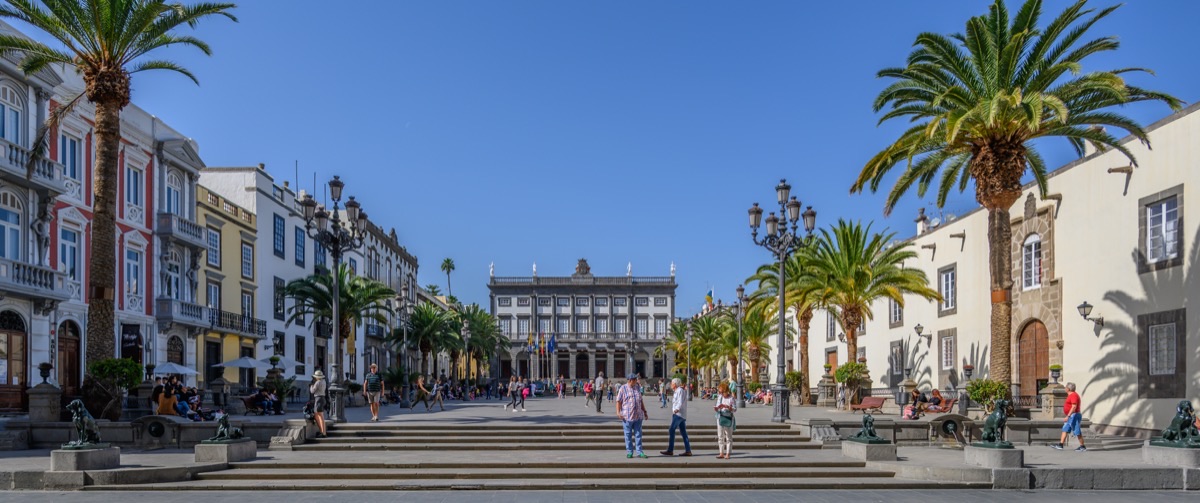
Located in the cobblestone streets of the Vegueta neighborhood, the cathedral shares the Plaza de Santa Ana with the Town Hall and other historical buildings, framed by the famous canine statues.
Practical Information
Canarian Gothic and columns shaped like palm trees
The Cathedral of Santa Ana is the most important church in the Canary Islands and the heart of the historic Vegueta quarter in Las Palmas de Gran Canaria. Construction began in the early 16th century and continued for more than three hundred years, which explains its fascinating blend of styles: a soaring late-Gothic interior, with columns that fan out at the top like Canarian palm trees, and a Neoclassical façade added much later by the architect and engineer Diego Nicolás Eduardo. For centuries it was the only cathedral in the archipelago, until the diocese was split in 1819 with the creation of the see in Tenerife.
The visit has two main highlights. The first is taking the lift up the bell tower, which offers a unique panorama over the rooftops of Vegueta, the cathedral dome and the Atlantic beyond. The second is the Diocesan Museum of Sacred Art, reached through the beautiful Patio de los Naranjos (Orange Tree Courtyard), which houses silverware, religious sculpture and artworks of great value. Admission is inexpensive and includes the museum; access to the worship area is free during mass times.
The cathedral presides over Plaza de Santa Ana, flanked by the town hall and watched over by the famous bronze dog statues that, according to one theory, gave the Canary Islands their name. You are right in the middle of Vegueta, so you can combine your visit with the wider Gran Canaria trip and a stroll through the historic old town around the Casa de Colón.
Frequently Asked Questions
How much is admission to Santa Ana Cathedral?
Admission is inexpensive (around €3-4) and includes the Diocesan Museum of Sacred Art and the Patio de los Naranjos. Taking the lift up the bell tower usually carries a small extra charge. Access to the worship area is free during mass times.
Can you go up the cathedral tower?
Yes. A lift takes you up the bell tower, where you get the best panoramic views of Vegueta, the cathedral dome and the ocean. It is the most recommended part of the visit and one of the finest viewpoints in Las Palmas.
How do I get to the cathedral in Vegueta?
It is on Plaza de Santa Ana, in the Vegueta quarter. From central Las Palmas you can walk along the seafront or take the Global and San Telmo buses that stop next to the old town. By car, the easiest option is the Vegueta or Mercado car parks.
What can you see inside?
Highlights include the Gothic naves with their slender palm-tree columns, the choir, the sacristy and the Diocesan Museum of Sacred Art, with silverware, sculpture and religious imagery. Everything is arranged around the serene Patio de los Naranjos.
How long do you need for the visit?
Between 45 minutes and an hour to see the interior, the museum and climb the tower. It is worth allowing extra time to wander through Vegueta, one of the prettiest parts of the city and a listed heritage site.