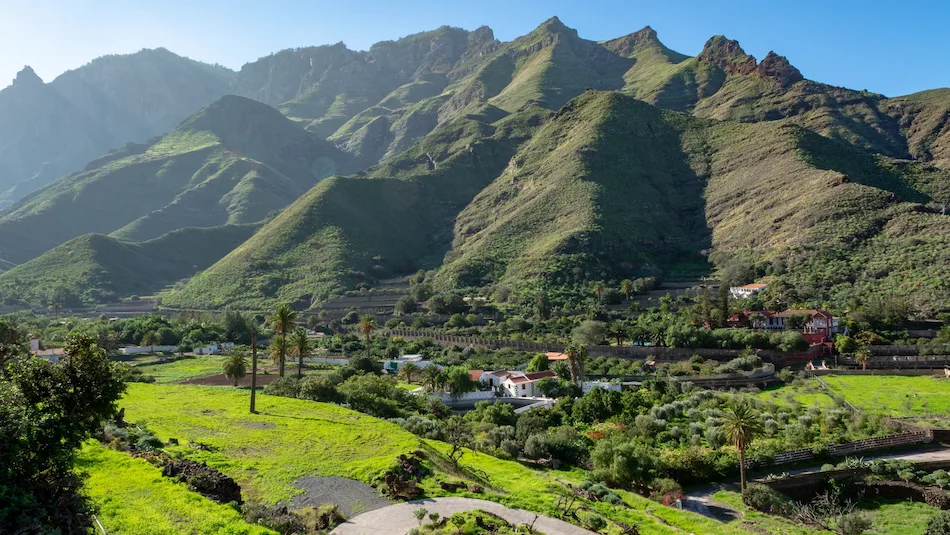
Europe's Only Coffee
Grown in volcanic soil since the 19th century
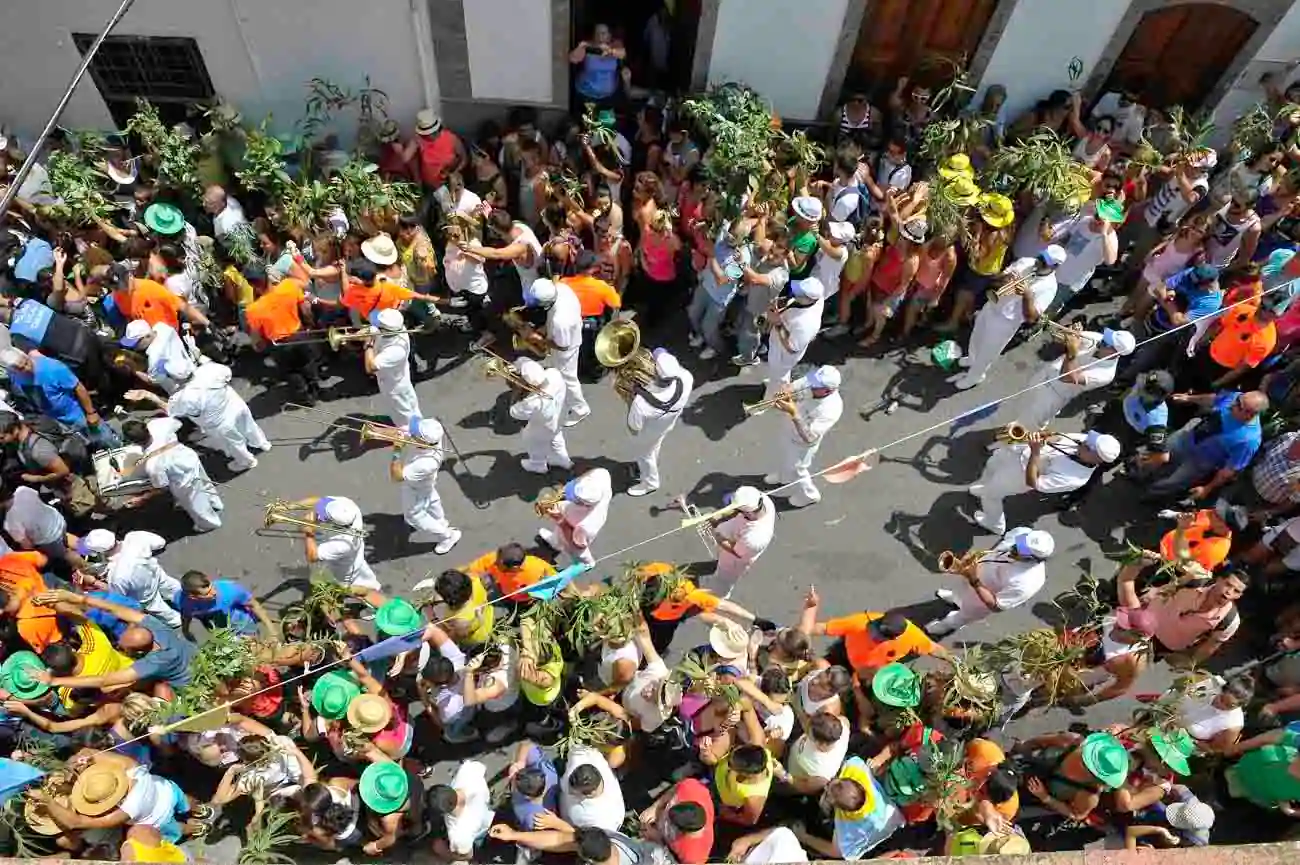
Festival Magic
40,000 people dancing with pine branches every August
Ferry to Tenerife, Europe's only coffee, ancient festivals, volcanic rock pools and 1,300-year-old tombs — all in one authentic Canarian village
Taste exclusive Arabica coffee grown right here in the volcanic valley plantations.
Watch fishing boats and ferries in a village that hasn't lost its soul to tourism.
Walk among 1,300-year-old tombs and dance in ancient rain festivals.
Grown in volcanic soil since the 19th century
40,000 people dancing with pine branches every August
Imagine 40,000 people dancing through narrow cobblestone streets, carrying pine branches like they're heading to the world's most amazing beach party. But this isn't just any party – it's the Bajada de la Rama, where ancient Guanche rain ceremonies meet modern-day celebration in an explosion of culture, music, and pure joy that happens every August in Agaete.
And here's the incredible part: this 500-year-old tradition is just the beginning of what makes Agaete special. This isn't your typical tourist trap – it's where real Canarian life happens, where fishermen still mend nets at dawn, where Europe's only coffee grows in volcanic soil, and where you'll find Flemish Renaissance art hiding in a tiny seaside chapel.
Here's what makes Agaete absolutely unique: it's the only place in Europe where you can sip locally-grown coffee while watching ferries head to Tenerife, all within walking distance of caves where indigenous people lived over 1,000 years ago. The fishing boats bobbing in Puerto de las Nieves harbor aren't museum pieces – they're still bringing in the daily catch, while that tiny chapel by the water houses art that belongs in the Prado Museum.
Whether you're here with a camera or just curious eyes, Agaete delivers the authentic Canarian experience that's increasingly rare in our Instagram world. Picture-perfect white houses with bright blue shutters line the harbor, but these aren't staged for tourists – they're home to fishing families who've been casting nets here for generations. And those ancient burial grounds on the hillside? They're not just archaeological sites; they're 1,300 years of human stories preserved in volcanic stone.
From the Bajada de la Rama festival to the coffee plantations, from the Maipés tombs to the ferry terminal — Agaete packs more unique experiences into one small village than most islands can offer. It's easily a full day trip from the south coast resorts, or the perfect base for exploring Gran Canaria's wild northwest.
Join 40,000 people in Spain's most unique cultural celebration!
Line 130 — fastest option, direct via motorway (~35 min)
Line 103 — scenic route via Gáldar & Moya, more stops (~55 min)
Line 102 — alternative northern route
All depart from San Telmo station, ~€3.60 one way
33km from Las Palmas via GC-2 (~30 min)
57km from the airport (~45 min)
Rental car recommended for coffee valley access
Agaete town → Puerto de las Nieves: 15 min walk
Don't miss the Paseo de los Poetas coastal walk — volcanic stone sculptures of Canarian poets with panoramic Atlantic views
Watch fishermen at work in the harbor
Best time for natural pool swimming (fewer crowds)
Beautiful light on the white houses and harbor
Ferry arrivals with Mount Teide backdrop
Bajada de la Rama — 40,000+ people, book accommodation early
24-hour celebration, starts at dawn
North coast is cooler and windier than the south
Light jacket and layers recommended year-round
Swimwear and non-slip shoes for volcanic rocks
Sun protection (no natural shade at Las Salinas)
Comfortable walking shoes for plantation tours
Book Finca tours in advance (fills up quickly)
Agaete makes an excellent day trip from the south coast resorts. Drive the GC-1 motorway west to GC-2 north — the journey from Maspalomas or Playa del Inglés takes about 1 hour 15 minutes (75 km). The scenic route through the mountains via GC-60/GC-210 takes longer but passes through stunning volcanic landscapes.
Suggested itinerary: Arrive by 10am, explore the harbor and Hermitage, swim at Las Salinas natural pools before lunch, eat fresh fish at a harbor restaurant, then visit the Agaete coffee valley for a plantation tour in the afternoon. If you're island-hopping, catch the Fred Olsen ferry to Tenerife from Puerto de las Nieves (1h 20min, from ~€20).
No car? Take guagua (bus) line 130 from Las Palmas San Telmo — it's the fastest at ~35 min direct. Line 103 is scenic via Gáldar & Moya (~55 min). Both cost ~€3.60. From the south, bus to Las Palmas first, then connect.
Agaete's strategic importance predates European arrival by centuries, serving as a major settlement for the indigenous Canarii people who recognized the valley's exceptional agricultural potential and natural harbor advantages. The conquest of Gran Canaria concluded here in 1483, making Agaete the final stronghold of Guanche resistance and the symbolic completion of Spanish control over the island.
Colonial prosperity transformed Agaete into an obligatory port for northern European trade during the 16th century, when Don Alonso Fernández de Lugo's governorship established commercial regulations that made the harbor essential for trans-Atlantic commerce. Genoese merchant Antón de Cerezo built a fruit export empire from Agaete, shipping tropical produce to European markets while financing the construction of religious buildings that showcase remarkable Flemish artistic treasures.
The town's economic evolution reflects broader Canarian commercial cycles: 16th-century sugar mills and grapevine cultivation gave way to 19th-century cochineal and tomato cultivation booms, while the 20th century brought industrial development through a shoe factory (1936-1975) that served the entire island. Each economic phase left architectural and cultural legacies visible throughout the village today.
Literary connections enhance Agaete's cultural significance, including Agatha Christie's 1927 visit that inspired her short story "The Companion." This literary heritage demonstrates how the village's authentic character attracted international recognition while maintaining its essential Canarian identity.
Discover layers of architectural history showing commercial evolution across five centuries.
The Bajada de la Rama represents one of Europe's most extraordinary examples of pre-Hispanic cultural persistence, transforming ancient Guanche rituals into a modern community celebration that attracts over 40,000 participants annually. The festival's origins trace to indigenous ceremonies where communities carried branches from the Tirma mountains to beat the sea, invoking rain during drought periods through spiritual connection between forest, community, and ocean.
Christian adaptation occurred by 1590, when documented records show offerings to the Virgen de las Nieves (Virgin of the Snows) incorporated into the ancient branch-carrying tradition. This cultural synthesis created a unique festival that maintains pre-Hispanic community participation while embracing Catholic religious elements, demonstrating remarkable adaptability across cultural transitions.
The festival received National Tourist Interest designation in 1972, recognizing its exceptional cultural significance while creating challenges of balancing authentic community participation with increased tourism attention. Modern celebration maintains essential elements that connect contemporary Agaete residents with ancestral traditions spanning over 500 years of cultural continuity.
Living connection between pre-Hispanic and modern Canarian identity through community participation that spans generations and maintains authentic cultural practices.
Opening procession with traditional bands awakening the community for festival participation.
Main ceremony with thousands carrying pine, eucalyptus, heather, laurel, and mimosa branches.
Papagüevos/Cabezudos giant heads representing local personalities, traditional costumes.
Closing ceremony culminating with fireworks over historic harbor at 01:00.
The Hermitage of Nuestra Señora de las Nieves, founded in the 16th century, houses one of the Canary Islands' most extraordinary artistic treasures: a Joos van Cleve triptych (c. 1510-1515) commissioned by wealthy Genoese merchant Antonio Cerezo. This Flemish Renaissance masterpiece demonstrates the remarkable cultural connections between Gran Canaria's maritime commerce and European artistic patronage during the colonial period.
The triptych's presence in Agaete reflects the village's historical importance as a trading port where Genoese merchants accumulated sufficient wealth to commission works from leading European artists. Currently undergoing restoration by Madrid's Prado Museum, the original artwork demonstrates sophisticated theological iconography and technical excellence characteristic of Northern European Renaissance painting.
During restoration periods, visitors can view an exact copy that maintains cultural access while preserving the original's integrity. The hermitage's architectural evolution, including 19th-century twin tower extensions, showcases how maritime communities adapted religious buildings to reflect their growing prosperity and cultural sophistication.
The hermitage is a fascinating stop: the architectural details reveal maritime influences in its religious construction, and the cultural context — Flemish art in a tiny Canarian harbor chapel — tells a remarkable story of global artistic exchange during the Age of Exploration.
Location: Puerto de las Nieves harbor
Opening hours: Variable, check local
schedule
Artistic significance: Only Flemish Renaissance
work in Canary Islands
Official Cultural Sites →
The Maipés Necropolis represents one of the Canary Islands' most significant archaeological sites, containing nearly 700 pre-Hispanic tombs distributed across more than one square kilometer of volcanic landscape. Dating from the 8th-10th centuries, with some individual tombs exceeding 1,300 years old, this extraordinary burial ground preserves indigenous Canarian mortuary traditions across multiple generations of community development.
The necropolis showcases sophisticated construction techniques using volcanic stone to create mounded structures ranging from simple circular forms to elaborate truncated cones reaching 8 meters in diameter and 3 meters in height. The term "maipés" derives from the Guanche word for "badlands," accurately describing the rugged volcanic lava field that indigenous communities selected for their sacred burial practices.
Designated as a Cultural Interest Site in 1974 and protected under Historic Heritage legislation since 1973, Maipés demonstrates remarkable preservation of pre-Hispanic culture within an active modern community. The archaeological park's interpretation center provides multilingual guided tours that connect ancient burial traditions with contemporary Canarian cultural identity.
These are sacred indigenous burial sites requiring respectful documentation approaches.
The necropolis is set in a dramatic volcanic landscape where ancient burial mounds stand against rugged terrain. Visit early morning or late afternoon to avoid the harsh midday sun — there's very little shade on site, so bring water and sun protection.
The modern interpretation center has multilingual displays and wheelchair-accessible pathways. Guided tours explain pre-Hispanic burial customs and how these communities lived and organized. Allow about 1–2 hours for a thorough visit.
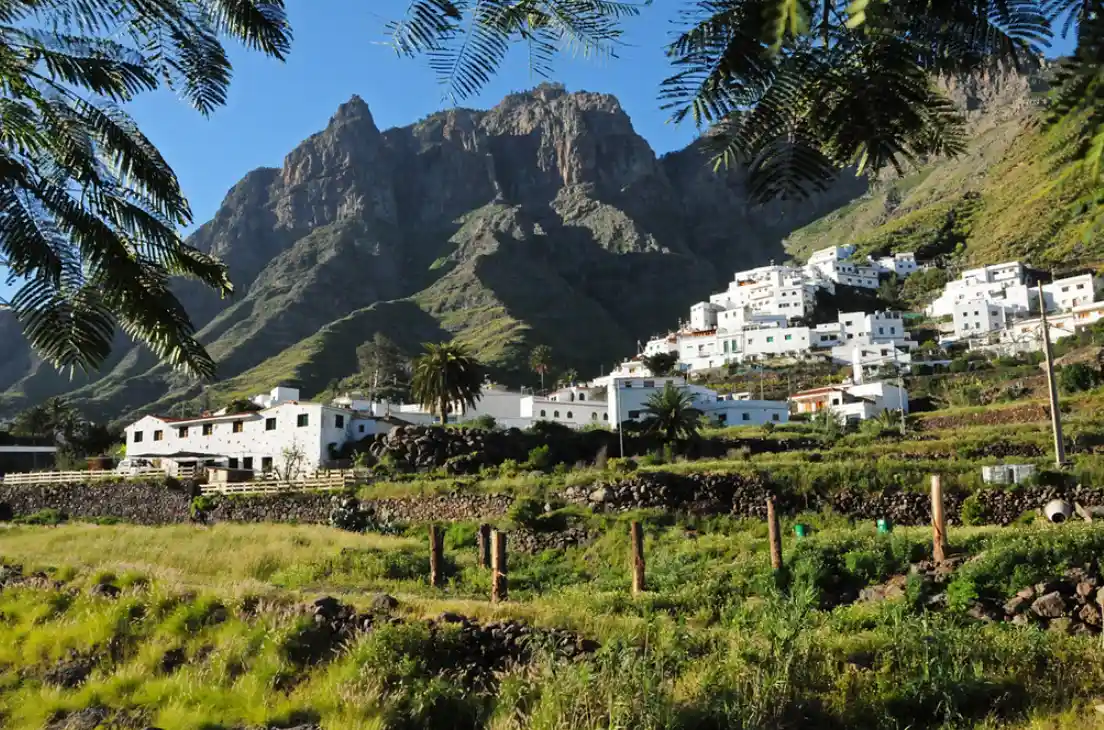
The Agaete Valley holds the unique distinction of producing Europe's only commercial coffee crop, cultivating Arabica Typica varieties with Ethiopian origins that survived where other continental plantations failed. This 19th-century agricultural introduction has evolved into a sophisticated operation that combines traditional cultivation methods with modern quality standards, creating coffee with distinctive light, aromatic, and complex characteristics featuring chocolate and licorice notes.
Finca La Laja/Bodega Los Berrazales represents the pinnacle of this agricultural tradition, offering 75-minute tours that document multi-generation family operations combining coffee cultivation with wine production and tropical fruit farming. These comprehensive agricultural experiences provide visitors with exceptional opportunities to see traditional methods adapted to modern sustainability practices.
The Valle de Agaete's terraced landscape, protected by the Tamadaba Natural Park's pine forests, creates unique microclimatic conditions that support diverse tropical agriculture including mangoes, papayas, avocados, guavas, and citrus fruits. This agricultural diversity, cultivated using traditional volcanic soil (picón) techniques, showcases sustainable farming adapted to island conditions that you can see on plantation tours.
Mangoes, papayas, avocados, guavas, citrus varieties
Traditional picón cultivation methods adapted over centuries
Mountain protection creating unique growing conditions
Varying harvest times for different crops throughout year
Finca Los Castaños: Traditional family plantation offering authentic coffee cultivation experiences
Visit Finca Los Castaños →Guided Agricultural Tours: Comprehensive experiences combining coffee, wine, and tropical fruit cultivation
Official Tourism Information →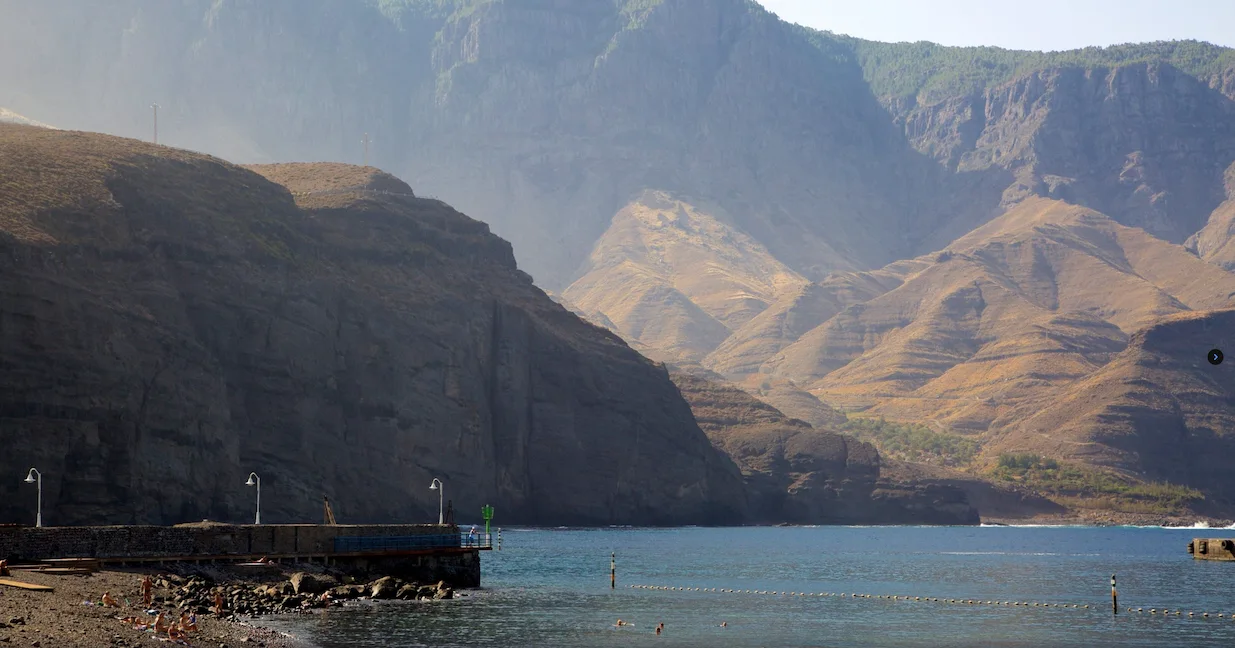
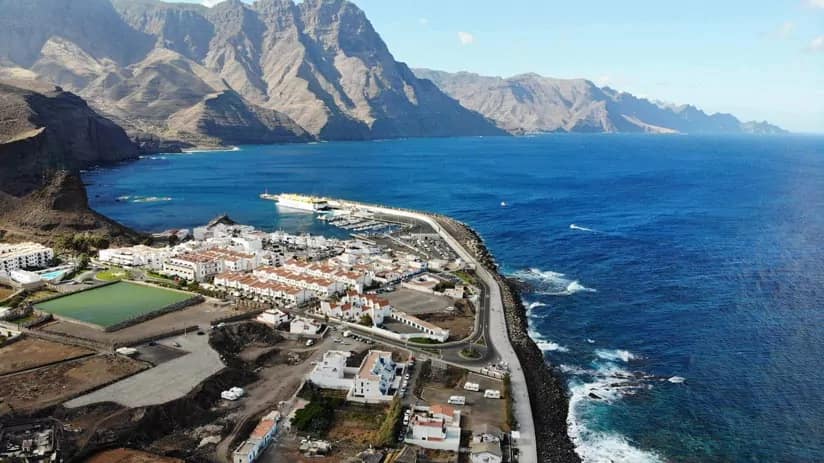
Puerto de las Nieves harbor maintains authentic fishing village character while serving modern transportation needs as the primary ferry terminal for Tenerife connections. This dual-purpose facility creates a fascinating dynamic where traditional fishing boats share marina space with Fred Olsen Express ferries, demonstrating how maritime communities adapt historical practices to contemporary requirements.
Watching morning activity reveals fishermen working from the historic harbor using traditional techniques passed down through generations, while the ferry terminal represents modern inter-island connectivity that maintains archipelago cultural unity. Up to eight daily Tenerife crossings (1h 20min journey time) make this a busy, fascinating harbor to explore.
The Paseo Marítimo maritime promenade extends to Las Salinas natural pools, creating pedestrian access along volcanic coastline that showcases traditional architecture adapted to coastal conditions. White houses with distinctive blue nautical trim reflect generations of maritime influence on residential design, while harbor infrastructure demonstrates functional adaptation to Atlantic conditions.
Visitor considerations include managing strong trade winds and sea spray that require appropriate clothing, while Mount Teide's visibility across the channel provides dramatic backdrops for maritime compositions. Late afternoon light enhances architectural details and creates compelling contrasts between traditional buildings and dramatic Atlantic seascapes.
Vintage infrastructure, working fishing boats, traditional harbor equipment
Modern maritime connections, Mount Teide backdrop views, inter-island culture
Maritime promenade to Las Salinas pools, coastal architecture documentation
Fred Olsen Express operates regular ferry services connecting Puerto de las Nieves with Santa Cruz de Tenerife, maintaining traditional inter-island connectivity that has linked these communities for generations.
The Paseo de los Poetas (Poets' Walkway) offers a unique cultural journey along the maritime promenade, where volcanic stone sculptures pay tribute to the great Canarian poets. This open-air museum connects the Canary Islands' literary heritage with the dramatic Atlantic coastal landscape.
The sculptures include representations of literary figures such as Tomás Morales, Saulo Torón, and other poets who captured the essence of the Canarian soul in their works. Each sculpture is accompanied by plaques featuring selected verses, creating a contemplative experience that unites art, literature, and nature.
The walkway is especially beautiful at sunset, when golden light enhances the textures of the volcanic stone sculptures against the backdrop of the Atlantic Ocean. A peaceful spot to sit and read the poetry verses inscribed on each plaque.
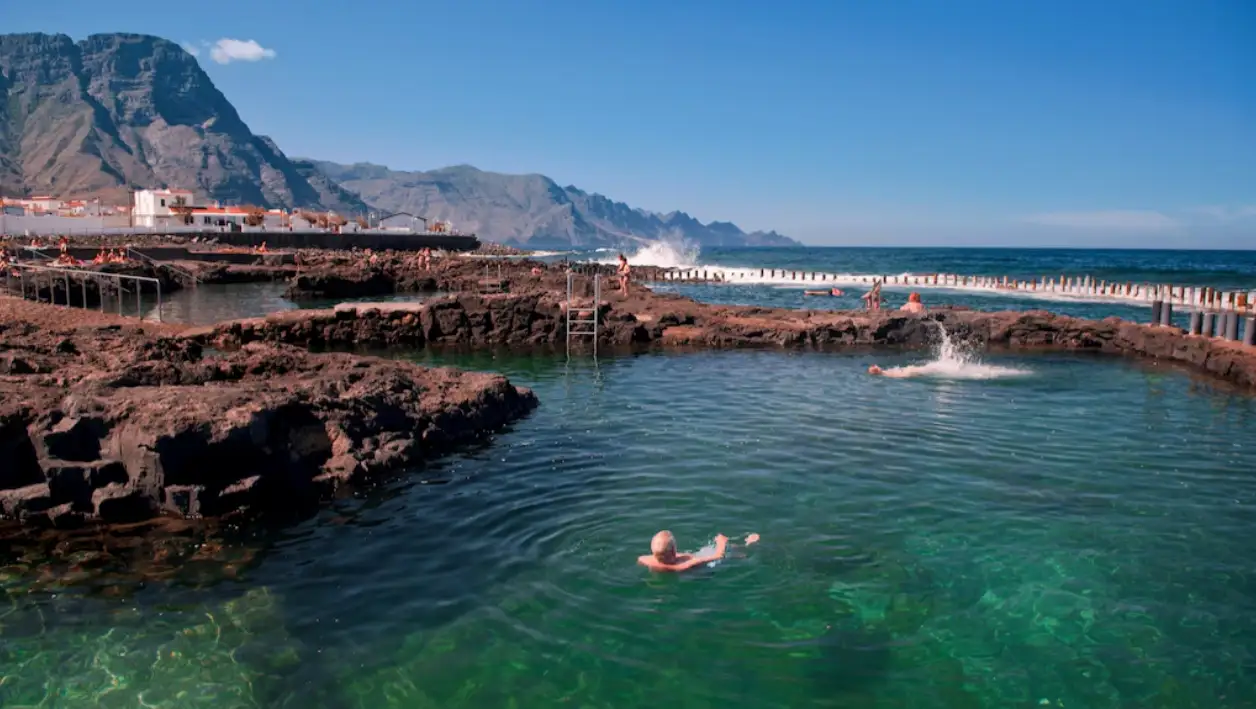
The Natural Pools of Las Salinas represent one of Agaete's most spectacular coastal formations, where volcanic lava has created protected natural pools offering safe swimming in the crystalline waters of the Atlantic. These volcanic pools are a favorite destination for both locals and visitors seeking an authentic bathing experience in natural settings.
Access to the pools is via the Paseo Marítimo (Maritime Promenade) connecting Puerto de las Nieves with Las Salinas, a pleasant 15-minute coastal walk offering spectacular views of the ocean and volcanic coastline. The walkway is equipped with safety railings and panoramic rest areas.
The pools have basic facilities including changing rooms, showers, and a small beach bar where you can purchase refreshments and local snacks. Depth varies by area, with shallow zones ideal for families with children and deeper sections for experienced swimmers.
The striking contrast between black lava formations and turquoise water makes this one of the most scenic swimming spots on the island. The changing light throughout the day creates different moods — morning calm is ideal for swimming, while sunset brings spectacular golden colors.
Less crowded, calm water, perfect light for photos
Warmer water, ideal for families, lively atmosphere
Spectacular golden light, less wind, dramatic photos
Tap any pin for directions in Google Maps
Harbor
Puerto de las Nieves
Ferry
Ferry to Tenerife
Swimming
Las Salinas Pools
Archaeology
Maipés Necropolis
Coffee Tours
Agaete Coffee Valley
Art
Hermitage of Las Nieves
Quick answers for planning your visit to Agaete
The fastest bus is line 130 (direct via motorway, ~35 min). Line 103 is scenic but slower (~55 min, via Gáldar & Moya). Both leave from San Telmo station, ~€3.60. By car it's 33km via the GC-2 (~30 min). Rental car recommended for the coffee valley.
Early August (exact date varies, typically around August 4th). It's a 24-hour celebration attracting 40,000+ participants. Book accommodation well in advance — the area fills up completely. Declared a Festival of National Tourist Interest in 1972.
Yes! Finca La Laja/Bodega Los Berrazales and Finca Los Castaños offer guided tours (~75 minutes) including tastings. Book in advance as they fill up quickly. The coffee has distinctive chocolate and licorice notes — Europe's only commercial crop.
Fred Olsen Express operates up to 8 daily crossings to Santa Cruz de Tenerife. Journey time is approximately 1 hour 20 minutes. Foot passengers from ~€20 one way, vehicles also accepted. Book online and arrive 30 minutes before departure.
Top experiences: swim in Las Salinas volcanic rock pools (free), take a coffee plantation tour, visit Maipés necropolis (1,300-year-old tombs), see the Flemish triptych at the Hermitage, walk the Paseo de los Poetas coastal sculpture trail, and eat fresh fish at the harbor restaurants.
Yes! By car via GC-1 and GC-2 it takes about 1 hour 15 minutes (75 km). Without a car, take a Global bus to Las Palmas San Telmo, then line 103 to Agaete (45 min, €3.60). Suggested itinerary: harbor & pools in the morning, fresh fish lunch, coffee valley tour in the afternoon.
Year-round — the north coast is cooler and greener than the south. Spring (March–May) is ideal for the valley in bloom. Early August for the festival. Avoid Friday mornings if driving (heavier traffic). Morning is best for the natural pools; late afternoon for the harbor light.
Agaete & Puerto de las Nieves represent more than picturesque coastal villages – they embody the authentic spirit of Canarian maritime culture where pre-Hispanic wisdom, colonial prosperity, and modern community life create experiences unavailable anywhere else in Europe.
From the extraordinary Bajada de la Rama festival to Europe's only coffee plantations, from Flemish Renaissance art in a seaside chapel to 1,300-year-old tombs — Agaete offers experiences that span continents and centuries while remaining vibrantly alive.
Whether you're catching the ferry to Tenerife, swimming in volcanic rock pools, sipping locally-grown coffee, or dancing with branches in the August festival — Agaete delivers the authentic Canarian experience that's increasingly rare to find.